What it Takes to Become a Future Sustainability Leader
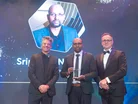
Sripragas Nadaraja, Sustainable Design Director at Ramboll, has been recognised with the Future Leader Award at the Global Sustainability Awards 2025.
Throughout his career, Sripragas has made contributions to the sustainable built environment in Singapore and the wider Southeast Asia region.
His work includes landmark projects for net zero energy and super low-energy buildings, where he has implemented innovative design solutions to achieve high sustainability standards.
Also recognised in the category were Ana Luiza Nogueira Rodrigues from Scala Data Centers and Katharina Fechtner of BASF Coatings GmbH Münster, who were both highly commended.

Leading sustainable design
Sripragas has been recognised for his role in advancing sustainability within the built environment.
He is credited with delivering net zero and super low energy designs, inventing a low-energy cooling system and creating a one-click embodied-carbon tool.
His work also involves applying regenerative principles at both a building and district scale.
“It's a great honour to be here and to represent Ramboll for the second year at this important award,” says Sripragas.
“This recognition means a lot to us.”
Through these actions, he has demonstrated an ability to turn complex challenges into practical and scalable climate solutions, utilising stakeholder workshops, education and policy influence to bring about change.
Future leader award criteria
The Future Leader Award is judged on a detailed set of criteria, each scored out of ten.
The evaluation process assesses how a nominee has demonstrated an innovative approach to sustainability, moving beyond conventional methods to create a notable impact.
It also measures the nominee's commitment to sustainability within their own organisation or community, looking for evidence of transformative leadership.
The direct sustainability impacts resulting from the nominee’s actions are another key factor, with an emphasis on verifiable and widespread benefits.
Finally, the award considers what makes the nominee a candidate for a future sustainability leader, evaluating their vision and potential to lead global change.
Ramboll's partner for sustainable change strategy
Sripragas's achievements align with the corporate strategy of Ramboll, which operates under the ambition of being "The Partner for Sustainable Change".

“I want to thank our scholars, my leaders and all of you,” says Sripragas at the event.
Ramboll has set to reduce carbon emissions in line with the Paris Agreement and has committed to achieving net zero GHG emissions across its value chain by 2040.
Ramboll's climate targets include:
- Approximately 70% of its suppliers to have science based targets by 2028 based on emissions covering purchased goods and services
- Roughly 53.9% reduction of Scope 1 & 2 emissions by 2030
- A goal of 27.5% reduction in fuel- and energy-related activities and business travel emissions by 2030
- Approximately a 55% reduction of emissions from sold products per ton produced by 2030
- Net zero emissions across operations and value chain by 2040.
This goal involves reducing absolute Scope 1, 2 and 3 GHG emissions by 90% from a 2019 base year, with the remaining 10% to be neutralised following SBTi criteria.
Ramboll's climate ambitions are also reflected in its client work, where it offers more sustainable, alternative solutions in all projects.
In line with its ambition to become a global leader in the green energy transition, Ramboll will exit oil and gas exploration before the end of 2025, redeploying this expertise into renewables.