Sustainability at Haleon: Recycle-Ready Packaging
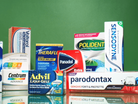
Haleon specialises in everyday health, with its products including Sensodyne, Centrum and Panadol being used by more than one billion consumers.
Its goal is to deliver better everyday health while working towards a more sustainable future.
Chris Low, Head of Sustainability, Procurement and Packaging at Haleon, said on LinkedIn: “We’re proud to share that Haleon has been ranked #34 in Sustainability Magazine’s Top 250 Sustainability Companies for 2025.
“This recognition is a testament to the incredible progress we’ve made in just over three years – driving sustainable innovation, embedding climate action across our supply chain and putting health and humanity at the heart of everything we do.
“A huge thank you to our teams, partners and suppliers who continue to push boundaries and make this possible.”
Haleon’s sustainability goals
Haleon’s sustainability strategy covers its commitments to making health more inclusive and reducing its environmental impact.
It aims to achieve net zero carbon emissions across its value chain by 2040 in alignment with guidance from The Climate Pledge and Race to Zero.
To tackle specific emissions, it plans to reduce its net Scope 1 and 2 emissions by 100% by 2030 compared to its 2020 baseline.
It also aims to reduce its Scope 3 carbon emissions by 42% by 2030 compared to 2022.
In 2024, its progress towards these goals include achieving a 50% reduction in its net Scope 1 and 2 carbon emissions.
Haleon entered into a Virtual Power Purchase Agreement in 2024 with Schneider Electric and other participating companies, which will support one of Europe’s biggest solar farms.

Reducing emissions in the supply chain
To help cut down on emissions, Haleon has been working on decarbonising its operations.
It has been electrifying its heat production, switching fuels and reducing any remaining heat-related emissions through carbon offsets.
Haleon is working towards reducing its energy consumption by switching to renewable energy sources for its electricity generation, by installing renewable sources on its sites or by procuring renewable electricity.
It plans to cut its Scope 3 emissions by working with its suppliers to incentivise their transition to renewable energy.
It also is working on redesigning its products by reducing and replacing carbon emission-intensive raw and packaging materials.
Recycle-ready packaging
Haleon’s goal is to reduce its use of virgin petroleum-based plastic by 10% by 2025 and by a third by 2030 against its 2022 baseline.
It aims to optimise its packaging to reduce the amount of material used through more compact design and develop new packaging formats and solutions.
It also plans to substitute virgin plastic with alternative resins, for example recycled plastic and bio-resin.
Haleon plans to develop solutions for all its packaging to be recycle-ready by 2025 as part of its goal to make all packaging recyclable or reusable by 2030.
Recycle-ready means that packaging is made of materials that are compatible with existing recycling infrastructure.
Its approach to becoming recycle-ready includes removing problematic plastics like PVC, transitioning to mono-material packaging and using materials that can be widely recycled.
It aims to source its paper packaging in a sustainable way, as it accounts for around half of its packaging footprint.
To achieve its goal of deforestation-free supply chains by 2030 for its paper-based packaging, Haleon is working with its suppliers and other stakeholders in the supply chain to ensure all of its paper-based packaging comes from recycled or certified sources.
Brian McNamara, Chief Executive Officer at Haleon, says: “As a leading global player in consumer health, Haleon is well-positioned to recognise and understand the social and environmental barriers that hold people back from achieving better everyday health.
“We want to use our reach, expertise and products to empower and support people to take charge of their health and wellbeing while having a positive impact on the world.”
Company portals
Executives
Brian McNamara
Chief Executive Officer
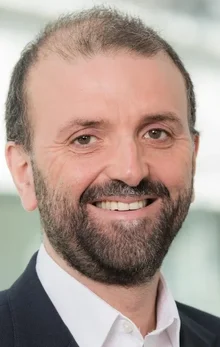
Chris Low
Head of Sustainability Procurement & Packaging