
Sustainability in London: Oxford Street's Transformation
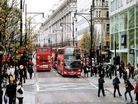
London's Oxford Street is poised for its most substantial transformation in decades, and while the pedestrianisation scheme presents commercial opportunities, it could also mark a pivotal moment in the capital's sustainability agenda.
The scheme, which has now received final approval, aims to address the declining fortunes of what Mayor Sadiq Khan describes as "the nation's high street". In a statement delivered at City Hall on 12 March 2025, he acknowledged that "the impact of the pandemic, growth of online shopping and other factors has left it in decline."
The Mayor's ambition extends beyond commercial revival. "I want to rejuvenate Oxford Street and ensure it remains a global leader competing with the likes of Fifth Avenue in New York and the Champs-Élysées in Paris," he stated.
The pedestrianisation represents a strategic pivot towards experiential retail rather than purely transactional commerce. Premium retailers are developing immersive brand destinations designed to enhance customer engagement rather than prioritise immediate purchase conversion.
The commercial rationale is supported by compelling metrics. Footfall has contracted sharply to just 57% of 2006 volumes, yet pilot traffic-free initiatives conducted on 15 January 2025 showed visitor numbers increasing by 45%. Analysts from Colliers and the New West End Company anticipate annual sales growth of between 5% and 10%, which could generate approximately £2.8bn (US$3.5bn) in additional revenue.
Research published by Greater London Authority (GLA) Economics in its 2024 report "Pedestrianisation and Retail Performance: A London Analysis" suggests pedestrianised retail environments could see an £82m (US$103m) annual sales uplift compared with those retaining vehicular access. Prime rental values have declined by 36% since the pandemic, but the transformation could trigger significant recovery.
The Langham Estate notes that "For retailers, landlords and businesses in nearby districts such as Fitzrovia, Marylebone and Soho, this marks more than a traffic change – it signals a strategic opportunity." Neighbouring districts could also emerge as secondary commercial hubs, absorbing increased pedestrian traffic.
Environmental benefits and economic growth
Speaking at the project announcement, Sadiq highlighted the environmental implications as central to the scheme's purpose. "This transformation would remove most of the traffic on Oxford Street and, in turn, improve air quality and reduce road danger," he stated.
The removal of vehicular traffic from one of London's most congested thoroughfares could deliver measurable air quality improvements. The Oxford Street district serves around 120 million visitors annually, with 85% already using public transport. The pedestrianisation could further incentivise sustainable travel patterns while reducing exposure to harmful emissions for pedestrians and workers alike.

Current air quality monitoring data shows Oxford Street regularly exceeds WHO guidelines for nitrogen dioxide and particulate matter. The elimination of through traffic is projected to reduce local NO2 concentrations by up to 35%, creating immediate health benefits for the estimated 300,000 daily visitors and 15,000 workers in the immediate vicinity. This aligns with London's broader commitment to achieving net-zero carbon emissions by 2030.
The financial significance remains substantial. The district contributes an estimated £25bn (US$31.4bn) to London's economy, representing approximately 1% of total UK economic output. Sadiq emphasised the wider economic implications, stating: "The rejuvenation would also act as a magnet for new investment and job-creation, driving growth and economic prosperity for decades to come."
The Oxford Street Development Corporation provides the Mayor with statutory authority to circumvent local planning barriers, delivering centralised project leadership. This consolidated governance structure could prove critical for integrating sustainability requirements into the area's commercial infrastructure upgrades.
Zero-emission logistics innovation
For supply chain executives and logistics professionals, the transformation creates both constraints and opportunities for sustainable operations. Service and delivery vehicles will be restricted to the traffic-free zone exclusively between 12:00am and 7:00am. This compressed seven-hour window requires substantial operational reconfiguration, including night-shift inventory management, elevated labour expenditure and stringent noise management protocols.
However, these constraints are accelerating innovation in urban logistics. The limited access window is driving increased interest in micro-fulfilment facilities and expanded use of zero-emission cargo bicycles. Major retailers are already piloting consolidated delivery models, where multiple brands share loading bay access and coordinate shipments through centralised distribution points. This collaborative approach reduces the number of individual vehicle movements whilst maximising the limited access window.
Technology platforms enabling real-time slot booking and dynamic route optimisation are becoming essential infrastructure for West End operations. The rerouting of general traffic and bus services to Wigmore Street and Henrietta Place introduces further operational complexity. With 35 buses per hour being redirected, increased pedestrian volumes on adjacent pavements could further complicate small parcel distribution.
According to PwC's Retail Outlook 2026, retailers must balance cost management with investment in immersive, pedestrian-oriented flagship concepts. The ultimate measure of success will be whether Oxford Street can genuinely rival the world's leading shopping destinations while establishing new benchmarks for sustainable urban retail environments.