Sustainability LIVE: The Importance of Strong Female Leaders
Women are actively helping to define sustainability leadership, with a 2025 industry report saying that women hold 63% of sustainability executive positions in large companies.
However, women are among those most at risk from the climate crisis facing humanity. The United Nations says women and children are 14 times more likely to die than men in extreme weather disasters.
For sustainability leaders, it is clear that gender equality is a key focus for faster and fairer climate action.
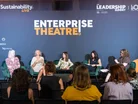
Sustainability LIVE: The Leadership Summit at London Climate Action Week saw global female executives discuss the power that women can bring to the boardroom.
The Women in Sustainability panel, in association with Climate Impact Partners, examined how female leaders across industries are shaping environmental strategy, driving organisational change and creating more inclusive leadership pathways.

Opening statement from Climate Impact Partners
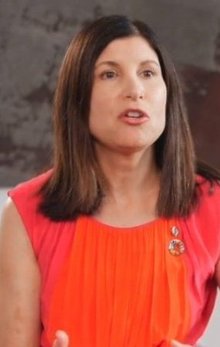
The panel discussion began with an opening statement from Sheri Hickok, CEO of Climate Impact Partners.
She spoke about the “superpowers” that women bring to the boardroom: “I have to be comfortable navigating complexity, balancing competing priorities and still delivering those outcomes.
“It’s not about activity, it’s about outcomes and that’s what we’re going to be measured on.”
“We are not just part of the conversation around sustainability. We are fundamentally shaping that in this space.
“We see more women in leadership roles, more women influencing decisions and more women sitting at the intersection of business, science and policy.”
The rise of women in sustainability
During the discussion, panellists delved into why there seem to be so many women within the sustainability sector.
Sarah Schaefer, ESG Director at Wrightbus, added: “Women intuitively sought space that they could create, and this is where we are.
“It’s really interesting now if you project where we’re going. A lot of the jobs that are booming are in the green energy transition and in green tech.”
Dr Gabrielle Walker, Co-Founder and Chief Scientist at CUR8, said: “I’m very proud to say that CUR8 is female-founded.
“I’ve coined a new term for our leadership at CUR8 – She-Suite – and we also have an all-female board, by accident.
“All of them are fierce and just the kind of women that get things done. I’ve met so many brilliant women in this space who are just like that.”
Building the female CSO role
The panel also focused on the key qualities that make a successful female leader.
Panellists discussed their own journeys through the industry and how they became the leaders they are today.
Sarah said: “We made our careers by acquiring knowledge, and that was a differentiator. Now, that’s not going to keep you competitive. Now, it looks totally different.”
Dr Márcia Balisciano, Chief Sustainability Officer at RELX, added: “I have always had to have critical thinking, persistence, stubbornness and the ability to collaborate.
“These skills are universal; they are going to be even more important going forward in a world where all the information is at your fingertips.”
Sheri added: “It’s back to basics. Sustainability decisions are now being taken by CFOs, so you have to understand operations, ROI and the strategy of the business.
“The fundamentals will still matter at the end of the day, so I’d say really lean into what may feel like really basic, boring things.
“The reality is, there’s a reason the fundamentals work, so keep using them.”
Women leading progress
Climate Impact Partners runs a study on the Fortune Global 500 companies and it has published reports for seven years in a row.
It has been found that the number of climate commitments has tripled since 2019, with 72% of the Global 500 having at least one climate target.
This relates to progress in the sustainability space, which is increasingly spearheaded by strong female leaders.
Gabrielle concluded: “There are places in the world where you don’t get discrimination against your religion or for your politics, or how you’re educated. But there is nowhere in the world that you can go to and not be discriminated against for being a woman.
“You can’t get away from the patriarch. This is 50% of the world. This is not a side thing that you should expand through other diversity. This is its own thing.”
Company portals




Executives
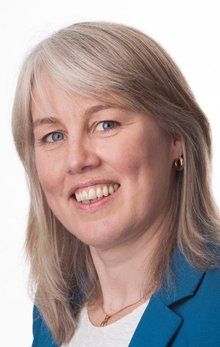
Gabrielle Walker
Co-Founder & Chief Scientist
Márcia Balisciano
Chief Sustainability Officer
Sheri Hickok
Chief Executive Officer