
Sustainability Roundtable: Backing 30MW’s of Solar Energy
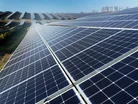
Four companies have joined forces under the Net Zero Consortium for Buyers (NZCB) to fund a new solar installation in Sicily.
Through four virtual power purchase agreements (VPPAs), they will secure 30 MW of clean electricity from a new facility developed by Aquila Clean Energy EMEA.
The project is designed to help each company reduce Scope 2 emissions, those linked to purchased electricity, while directly supporting the construction of new renewable capacity.
The initiative uses the NZCB’s VPPA 2.0 model to enable smaller buyers to contribute meaningfully to the energy transition.

NZCB procurement model targets new build capacity
Sustainability Roundtable confirms a new collective clean energy purchase through its NZCB, involving four VPPAs that secure 30 MW of solar power.
This energy will come from the Catania Solartrack facility, a 50 MW solar site developed by Aquila Clean Energy EMEA in Sicily.
"Our NZCB clients help to lead the corporate energy transition by procuring EACs that actually cause new renewable capacity," says Jim Boyle, Chief Executive of Sustainability Roundtable.
"Corporations must secure EACs to meet their Scope 2 emissions goals, as they represent the only way to claim each megawatt hour of renewable energy – whether produced on your roof or 1,000 miles away.
"These NZCB buyers want a cost-effective clean energy strategy that is the proximate cause of new renewable projects.
"Our VPPA 2.0 approach makes possible both a commercially compelling procurement that individual buyers cannot do alone and one that actually causes new renewable energy projects.
"Best of all, our VPPA2.0 approach is scalable throughout the EU and has already caused more than a Gigawatt of new renewable energy projects in the US."
Solar site will serve homes and reduce emissions
The VPPA 2.0 strategy developed by the NZCB aggregates smaller energy buyers to collectively fund renewable energy projects that would otherwise be out of reach.
This joint procurement helps finance new installations by securing long-term fixed-price contracts for energy, which in turn supports developers like Aquila Clean Energy to move forward with projects.
Marcos Domínguez, Head of Power Hedging & Research at Aquila Clean Energy EMEA, sees the agreement as: "a significant milestone in our ongoing commitment to sustainability and the wider shift towards a low-carbon economy".
"Collaborative purchasing agreements such as this one are essential for accelerating the large-scale deployment of renewable energy."
"By joining forces with other forward-thinking organisations, we can increase the efficiency of renewable energy access, helping to decarbonise the grid in a way that benefits the environment and the communities we serve.
"We look forward to continuing to work with our partners and stakeholders to build a more sustainable future."
The Catania Solartrack facility, once operational, is expected to generate enough power to supply 27,000 homes each year and prevent approximately 24,000 tonnes of CO₂ emissions annually.
Spanning nearly 250 acres, the site combines agricultural use with energy production. Engineers used PVcase, a solar design platform integrated with AutoCAD software, to plan the installation.
Construction should complete by March 2026, with operations beginning in late 2026.
This structure supports around 61,000 Purchaser Caused Environmental Attribute Certificates (PC EACs) each year over the course of the 10-year contract.
PC EACs are a type of EAC directly linked to the purchaser’s financial backing of the project, offering a stronger claim to the environmental benefit than standard certificates from existing projects.
Through NZCB’s systematised reverse auction process, smaller corporate buyers access utility-scale energy at fixed prices, supporting both their financial targets and decarbonisation plans.
The focus remains on creating new capacity rather than purchasing from already-built projects.
Back Sicilian solar projects
The procurement involves four corporate buyers: Autodesk, IDEXX Laboratories, Synopsys and an unnamed NZCB member.
Each contributes to the 30 MW package, drawing from the same Sicilian solar facility.
Autodesk, which develops software for engineering, architecture and construction, commits to 5 MW from the project.
The purchase fits into its broader push toward 100 percent renewable energy and adds new capacity to the grid, aligning with its climate goals.
"At Autodesk, we are committed to embedding sustainability throughout our business," says Joe Speicher, Chief Sustainability Officer at Autodesk.
"Our investments in renewable energy and low-carbon technologies reflect our commitment to reducing emissions across our operations and empowering customers to do the same."
"We are thrilled to join the NZCB because we understand that, by advancing cleaner energy sources and embedding carbon intelligence into our design and make tools, we're accelerating progress toward a more resilient and equitable lower-carbon future."
IDEXX Laboratories, a company focused on pet healthcare technologies, will also buy 5 MW of solar power.
This is the firm's third NZCB-backed energy procurement globally and its first in Europe.
The purchase is aligned with IDEXX’s energy consumption in Europe and supports its plan to achieve 100 percent renewable electricity by 2030.
Synopsys, which offers integrated design solutions from silicon to systems, commits to 7 MW from the project.
The agreement aligns with its long-term decarbonisation programme and science-based targets approved by the Science Based Targets initiative (SBTi).
Erika Varga McEnroe, Senior Vice President Legal and Deputy General Counsel at Synopsys, says: "At Synopsys, we believe that operating responsibly is fundamental to building long-term value."
"This includes pursuing decarbonisation efforts that make sound business sense, help us meet our SBTi validated emissions reduction targets and enable the availability of more renewable energy. We appreciate that NZCB and Aquila Clean Energy can support our efforts."
The final buyer, not publicly named, will purchase 13 MW of energy from the facility, completing the 30 MW consortium package.