Sustainable Strawberries: Dyson's High-Tech Farming
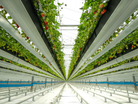
Britain imports 90% of its winter strawberries, averaging 2,351 air miles for each batch and a considerable amount of emissions.
Dyson is combatting this by creating a sustainable circular farming system in the UK.
“It might seem odd for an industrialist who makes vacuum cleaners, hairdryers and robotics to be interested in farming but I see it as an extension of that. This is all about machinery, mechanics and science improving things, it's regenerative and it’s the right way to farm,” says Sir James Dyson, Founder of Dyson
"I think it’s really important that Britain grows its own food.
"Sustainable food production, food security and the environment are vital to the nation’s health and the nation’s economy; there is a real opportunity for agriculture to drive a revolution in technology and vice versa. Efficient, high-technology agriculture holds many of the keys to our future. Dyson Farming strives to be at the forefront of this.”
He says that his background as an engineer helped him to spot problems with the UK's import system for strawberries.
“What excites me is taking things that don't work and making them better," he added.
How does it work?
The greenhouse is powered by renewable electricity and surplus heat from Dyson's adjacent anaerobic digester.
A climate control system keeps the temperature at optimal level to maintain growth all year round.
The anaerobic digesters produce gas, driving turbines that produce enough electricity to power 10,000 homes.
The heat this creates is captured and used to warm up the greenhouse to encourage strawberry growth in colder months.

Rainwater is stored in a lagoon to water the plants.
The greenhouse has advanced robotic picking and packing to get the fresh fruit to customers quickly.
The vertical growing system has boosted yields by 250% compared to traditional methods.
“Growing quality strawberries at this scale, in a sustainable way, out of season, not only requires technological innovation but the expertise and experience of people who care passionately about producing quality strawberries,” says Angel Angelov, Glasshouse Manager at Dyson Farming.
“I am proud to be part of this team.”
Angel studied computer science at the University of Ruse, Bulgaria.
He started out his greenhouse journey more than 20 years ago, working for East End Nurseries.
He has been working for Dyson for more than five years and working on the strawberry farm for three years.
“This is our vision for the future of farming,” he says.
“Growing sustainably food with minimum inputs while maximising production and maintaining the high quality standards we have already set over the years is the key goal. And we have delivered just that!”
“It’s so exciting to get this project over to commercial scales and implement in our future expansion plans! Once completed this is going to be an out of this world growing facility. where robotics, automation, technology and people’s knowledge come together to deliver the best quality food for our end consumers.”

What does this mean for the future?
“Dyson Farming is developing new approaches to efficient, high-technology agriculture, which we hope will lead to a commercially sustainable future,” says Sir James Dyson
This could make the UK more self-sufficient, reducing air miles that build up over the winter period.
According to the World Economic Forum, conventional agriculture accounts for 80% of worldwide deforestation.
Vertical farming does not require the same amount of land clearance and can be set up in urban areas, giving potential for a reduction in logistics emissions alongside land use.