
The Construction Industry Can't Afford to Lose Women
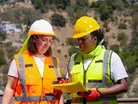
The numbers are hard to ignore. Women hold barely 15% of UK construction jobs, and only 2% of site-based roles according to the Chartered Institute of Building.
At the same time, the UK Government wants to deliver 1.5 million homes by 2029, a target already threatened by a debilitating shortage in skilled professionals.
Retaining female talent is therefore as much an economic imperative as an equality goal.
The five-year exit window
Dr Chrissi McCarthy, managing director of the Centre for Behavioural Equality and a former site engineer, says the discrimination women face on site remains “every day, at different levels,” yet it can go unchallenged when individuals feel they must “keep [their] head down” and accept it.
Speaking on the University of the Built Environment’s BE Sustainable podcast, she told host Mike Speight that, early in her career, she assumed that if no harm was intended “it probably wasn’t discrimination”. However, the cumulative effect became impossible to ignore when she realised there were “no women above me” in site-management or engineering roles.

When Dr McCarthy was later reassigned from engineering to paperwork – (“They basically sat me in a room with a computer and told me to do data entry”) – the message became clear to her. Talent, she argues, will not stay where it is undervalued: “People don’t necessarily leave because they’re not good enough; more often they leave because they realise how good they are.”
The result is a striking retention gap. “Women tend to last five years on average in the construction industry,” Dr McCarthy said. If the sector cannot extend that window, it will keep losing experience, mentors and future leaders at the very moment it needs them most.
Looking beyond gender bias, many frustrations are also logistical. “You’re looking at a basic of a 60-hour working week just between Monday and Friday when you’re including travel,” Dr McCarthy said. Such schedules, combined with frequent postings far from home, make any parental caring responsibilities almost impossible to juggle and sap the appeal of promotion.
Creating context-based solutions
Through her consultancy, Dr McCarthy helps to redefine the EDI landscape through research and contextual application, positively shaping the future of construction-specific workplace equality. That means scrutinising retention, promotion and absence data by grade and discipline, then matching solutions to local context - an approach more targeted than the “copy-and-paste” equality programmes she encountered earlier in her career. FIELDS is her consultancy’s step-by-step methodology for creating impactful EDI strategies.
“It's helping organisations see what the real opportunities are contextually and what the constraints are around those opportunities” she said. “Also, create a place where people get to do something they love in an environment they love. Because if I'd have had that, there's no two ways about it, I would still be in the construction industry right now.”
Social sustainability joins the net-zero ledger
Investors are now pushing for evidence that companies can deliver not only environmental targets but fair employment.
Under the UK Government’s Social Value Model, major public-sector contracts must report on diversity outcomes alongside emissions.
For firms already managing carbon, circular economy and digitalisation targets, embedding inclusion early reduces future compliance risk.
The podcast interview
The Be Sustainable interview offers a clear message: technical innovation will stall unless the industry also modernises how it treats its people.
Dr McCarthy’s own career journey, which she reveals during the interview, shows both what attracts women to construction and what still drives them away.
The episode, ‘Shaping Inclusivity in Construction’ part 1, is available now on all major podcast platforms.