The Future of AI @ LCAW: Who are the Speakers?
Sustainability LIVE @ London Climate Action Week - The Leadership Summit is a one-day event on 25 June 2026 for senior sustainability executives.
It will bring together C-suite executives and sustainability leaders to discuss strategies to make a positive impact on the environment and society.
The Future of AI in Sustainability panel will share techniques and innovations for using AI to transform the way organisations measure and manage their environmental footprint.
This is an exclusive event and those interested in attending can register their interest now.

The Future of AI panel
Sustainability LIVE @ London Climate Action Week - The Leadership Summit is set to deliver insights, connections and solutions to help accelerate progress towards net zero, with more than 250 in-person attendees.
It features 25 expert speakers and four interactive workshops, with the programme designed to offer practical guidance and a strategic perspective on embedding climate action across operations, supply chains and investment decisions.
The Future of AI in Sustainability panel will take place at 14:15-15:00 (BST) in The Enterprise Theatre at CodeNode London.
The session will highlight cutting-edge use cases for AI, including emissions tracking, predictive climate modelling, optimising energy systems and supply chain transparency.
Experts on the panel will discuss opportunities, risks and ethical considerations as AI becomes a core tool in driving more effective and accountable sustainability outcomes.
Sophie Graham, Chief Sustainability Officer, IFS
At IFS, Sophie focuses on the successful delivery of the company’s sustainability strategy, scaling climate action across its global operations.
She joined IFS in 2021, working on heading up the development of its Sustainability and ESG strategy.
She has more than 13 years of experience in environmental law, CSR and sustainability, working for global companies such as FUJITSU and Santander.
At Sustainability LIVE London 2024, Sophie said: “One thing that’s been talked about a lot here at Sustainability LIVE is the role of AI in sustainability. I think there are some really exciting use cases when it comes to the application of AI.
“With IFS, we work with heavy industries, so there are some real sustainability benefits on an industrial scale that can be realised through applying AI to business optimisation, resource allocation and capital allocation decisions.”
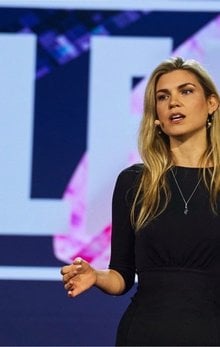
Bianca Wong, Chief Sustainability, Digital & Marketing Officer, Kingspan
Bianca first joined Kingspan in 2013, working in the Australian division of the company before joining the UK & Ireland division in 2015.
In 2019, she became the Global Head of Sustainability and took on her current role in 2024.
At Kingspan, she leads cross-functional transformation across sustainability, AI enablement, customer experience and brand.
In her work, she aims to unlock solutions at the intersection of sustainability, technology and innovation to help tackle complex environmental and social challenges.
Bianca writes on LinkedIn: “I’m excited to be speaking at Sustainability LIVE: The Leadership Summit during London Climate Action Week.
“I’ll be speaking on The Future of AI in Sustainability alongside an inspiring line-up of industry voices driving meaningful change across business and sustainability.”
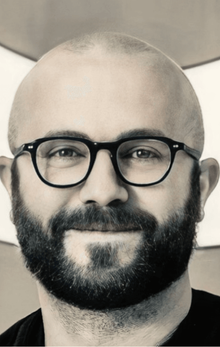
Nathan Allen, Chief AI & Innovation Officer, The Ellen MacArthur Foundation
Nathan joined The Ellen MacArthur Foundation in 2026 as its first Chief AI and Innovation Officer.
He previously spent eight years working at Google, most recently holding the position of Head of Global Sustainability Programmes and Partnerships.
At the Foundation, he spearheads the development of innovative solutions and strategic partnerships across each pillar of the Foundation’s work.
He has more than 20 years of experience across corporate and NGO strategy, innovation, policy development and programme management.
Nathan said on LinkedIn: “For over 15 years, The Ellen MacArthur Foundation has explored the application of new technologies to the challenge of circularity. And one of these new areas is among the most hopeful uses of AI that I’ve seen.
“Unfortunately, the traditional methods of materials science can take years to move from lab to market with new compounds. But AI is introducing an evolution in that approach.
“The old ‘identify, test, fail’ loop is giving way to inverse design – an approach powered by generative AI and chemical language models. Instead of searching for needles in a haystack of possible materials, scientists can now begin to define the needle first and partner with AI on its development.”
Company portals




Executives

Bianca Wong
Chief Sustainability, Digital & Marketing Officer
Nathan Allen
Chief AI & Innovation Officer
Sophie Graham
Chief Sustainability Officer