The Impact of Dassault Systèmes’ Virtual Twin Technology
Energy and resource efficiency represent some of the lowest-hanging fruit when it comes to cutting environmental footprints.
The French software company Dassault Systèmes has published its first Impact Report, which details its environmental progress to date and how its products are helping clients reach similar goals.
The company reported a 78.3% drop in Scope 1 and Scope 2 greenhouse gas emissions compared to its 2019 baseline.
At the same time, 50.4% of its suppliers have set science-based targets to reduce emissions.
Along with the impact report, the company announced new climate targets that have been validated by the Science Based Targets initiative (SBTi).
Dassault aims to achieve net zero greenhouse gas emissions across its entire value chain by 2040.
By 2035, Dassault has pledged to cut its Scope 3 emissions by 66.33% for every euro of value added.
“Sustainability is both a responsibility and a driver of transformation,” says Philippine de T’Serclaes, CSO at Dassault Systèmes.
“With our new SBTi-validated net zero target, we are reinforcing the scientific rigour of our climate trajectory while helping customers use virtual twins to better model, understand and improve the impact of their decisions.”
Virtual twins help improve material efficiency
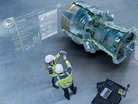
In addition to reducing its own emissions, Dassault uses its virtual twin technology to help industrial clients improve material efficiency and optimise their products.
Virtual systems can help design new sustainable materials or processes, provide lifecycle assessments, and improve production efficiency.
According to Dassault, a virtual twin differs from a digital twin by simulating behaviour and evolution in real-time instead of simply digitally mirroring physical objects.

One client in the consumer packaged goods industry used Dassault’s software to change its packaging design and the materials it uses.
This led to an 18% reduction in plastic use and a 76% increase in the amount of recycled materials included.
Another client in equipment manufacturing used Dassault’s data management tools to reduce scrap materials.
By creating a component inventory and tracking parts throughout their lifecycle, the company saved 50% of its components from becoming scrap, according to Dassault.
This process saved the company US$45m by reusing parts.
Changing processes and using modular design
Virtual twin tools also help reduce emissions in heavy industry and construction, Dassault says.
A wind turbine manufacturer used its design software to make its blade manufacturing process more efficient.
By switching to digital modelling and using laser projections, the company cut its fiberglass use per blade by 4%.
Across an annual output of 7,850 blades, the process modification avoided 7,995 tons of carbon dioxide emissions, Dassault reported.
In the construction sector, a start-up used Dassault’s virtual twin platforms to create pre-assembled residential modules.
These digital tools helped engineers optimise structural designs and supply chain logistics, which enabled the housing structures to earn a high environmental accreditation.
Company portals

Executives
Philippine de T'Serclaes
Group Chief Sustainability Officer