Start Campus' SINES Data Centre's Sustainability Journey
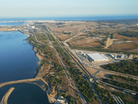
The SINES Data Campus stands out as one of Europe’s most ambitious data centre developments.
By the time construction is completed in 2030, the site is projected to reach more than 1.2GW of computing capacity, placing it among the most powerful data centres globally.
Crucially, as concerns grow around the environmental footprint of AI, the campus is designed to operate entirely on renewable energy. It also relies on seawater to meet all of its cooling requirements.
A recent €695m (US$812.6m) investment from Nscale — which works alongside Start Campus and Microsoft on the project — has brought renewed attention to the site. It serves as a clear example to data centre operators and hyperscalers of what sustainable infrastructure can look like in a rapidly expanding and resource-intensive industry.
From coal to cloud
Start Campus, the company responsible for developing, operating, and managing the site, was established in Lisbon in 2020. It quickly recognised the potential of Sines, a coastal town in Portugal’s Alentejo region.
The site itself is a repurposed industrial area next to a coal-fired power station that had recently been decommissioned by EDP.
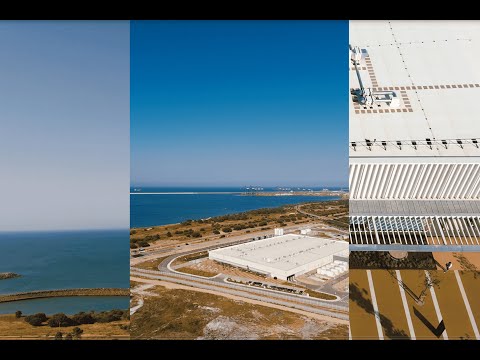
A key attraction was the location’s existing seawater intake basin, along with its direct links to international subsea fibre cables.
Plans for the campus progressed rapidly, and in March 2021 the Portuguese government designated it a Project of National Interest. Construction of the first phase began in April 2022, with SIN01 — the campus’s first data centre — becoming operational in late 2024.
That same year, Eurostat reported that 87.5% of Portugal’s electricity came from renewable sources, reinforcing the feasibility of Start Campus’ low-carbon vision.
Speaking in 2025, CEO Robert Dunn said: “At Start Campus, we are committed to building the foundation for the next generation of sustainable, AI-ready digital infrastructure.
“Power is one of the most critical resources in today’s digital infrastructure. But it’s not just about access – it’s about managing power efficiently, intelligently, and sustainably at scale.”
The issue of water
While operating entirely on renewable energy is a significant achievement, the campus’s most distinctive feature is its approach to water use.
SIN01 is the world’s first AI data centre to use ocean water as its primary cooling system, drawing directly from the Atlantic and returning it just one degree warmer.
Its location on the former coal plant site plays a key role here, as the facility repurposes the existing piping infrastructure once used for cooling the power station.
With rising global temperatures and increasing concerns about water scarcity, data centres have faced growing criticism over their freshwater consumption. This system avoids that issue entirely.
As a result, the campus achieves a Water Usage Effectiveness rating of zero and a design PUE of 1.1 — both among the strongest performance metrics in the sector.
Why the SINES Data Campus matters
The data centre industry is facing mounting pressure to justify its resource demands.
According to the UN, data centres consumed approximately 448TWh of electricity last year — more than all but 10 countries worldwide.
Given this scale of consumption, developments like the SINES Data Campus provide a tangible example of what sustainable, low-impact computing can achieve.
This is a major reason why Nscale is investing heavily in the project’s future.
"Building on a proven foundation, the expanded deployment in Sines, Portugal creates one of the most advanced environments in Europe for high-density AI infrastructure," says Nscale's CEO and Founder, Josh Payne.
"It also represents one of the largest AI infrastructure investments in Portugal’s history – and among the most significant in the EU – reflecting the surging demand we’re seeing for Nscale’s services," he adds.
Although he highlights the natural advantages of the Portuguese site, maintaining operations at this level of sustainability requires ongoing effort and commitment.
As Robert says: "It takes daily attention to make sure that you can be as sustainable as possible."
Company portals



Executives
Josh Payne
Founder & CEO
Robert Dunn
CEO