
How Are Toyota, ENGIE & HRS Powering Hydrogen Transport?
Global transport emissions are driving the search for alternatives to conventional vehicles, with road transport responsible for 11% of worldwide greenhouse gas emissions according to 2023 Statista data. The transition away from fossil fuels has positioned electric vehicles as the primary successor to internal combustion engines, yet they represent just one pathway amongst several emerging technologies.
Electrification could dominate the next chapter of road transport, though hydrogen-powered vehicles are poised to provide a complementary solution. However, the technology faces practical hurdles before widespread adoption. Refuelling infrastructure remains a critical challenge – hydrogen vehicles need to match the convenience and speed that drivers currently expect from petrol stations.
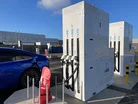
This requirement has prompted French manufacturer HRS to engineer a dual-nozzle system that could reshape hydrogen delivery. The company has integrated elements of its Mid Flow Twin (MFT) system into a commercial refuelling dispenser, collaborating with Toyota Motor Europe and ENGIE Lab CRIGEN on the development.
The partners unveiled their working prototype at Hyvolution Paris on 27 January 2025, demonstrating the dispenser filling a vehicle at HRS's Champagnier test facility. The innovation arrives in January 2025, twelve months after the trio first introduced the MFT concept, which employs twin nozzles to reduce refuelling duration for both heavy goods vehicles and passenger cars.

Rigorous testing now begins
Engineers at HRS's headquarters in the Isère department of Southeast France will subject the integrated system to extensive component and integration qualification tests to verify whether the technology can withstand the rigours of daily commercial use.
The trials will force hydrogen through the system at 300 grams per second under 700 bar pressure – comparable to inflating a car tyre to 68,950 kilopascals. Such extreme pressures are essential for compressing hydrogen to sufficient density for viable vehicle range.
The testing programme incorporates components developed through the European RHeaDHy project, which has secured funding from the EU's Horizon Europe research and innovation programme. HRS anticipates beginning the process of incorporating the technology into international standards by summer 2026, should the trials proceed successfully.
Standardisation could prove crucial, as manufacturers cannot legally install MFT systems at public refuelling stations without it.
Hydrogen's potential transport applications
The Mid Flow Twin technology responds to requirements outlined in the European Alternative Fuels Infrastructure Regulation, which establishes minimum refuelling capacity thresholds across member states.
The dual-nozzle design enables a single station to service a heavy goods vehicle and passenger car concurrently, potentially reducing by half the stations required in high-traffic areas. This efficiency carries weight when individual hydrogen stations can demand several million dollars for construction and operation.
Hydrogen fuel cell vehicles offer distinct advantages in specific transport segments. Heavy goods vehicles benefit from hydrogen's superior energy density compared to batteries, enabling longer ranges without the weight penalties that would reduce payload capacity. Refuelling times of three to five minutes match diesel convenience, making hydrogen particularly suitable for fleet operations where vehicle downtime directly impacts profitability.
HRS currently operates 31 high-capacity stations across Europe and further afield, with sites capable of dispensing between 300 kg and one tonne of hydrogen daily. For comparison, a typical hydrogen passenger car requires approximately 5 kg for a full tank.
All terminals function at multiple pressure levels, accommodating both 350-bar systems preferred by buses and heavy goods vehicles and 700-bar systems employed in passenger vehicles.
Partner contributions to the project
The collaboration unites three organisations with complementary capabilities: Toyota's extensive fuel cell vehicle development experience, ENGIE's energy infrastructure knowledge through its Lab CRIGEN research centre and HRS's focus on manufacturing hydrogen refuelling equipment.
Hassen Rachedi, founder and CEO of HRS, views the partnership as evidence that the technology is progressing beyond laboratory environments. "By combining our expertise with Toyota Motor Europe and ENGIE Lab CRIGEN, we are transforming an ambitious innovation into a concrete industrial solution," he says.
"This collective momentum paves the way for standardisation in the summer of 2026 and the creation of a new standard for hydrogen infrastructure."
HRS's French production facility can assemble up to 180 stations annually, with individual units requiring between six and twelve weeks from order to completion.
The technology development proceeds amid ongoing debate about hydrogen's ultimate position in transport decarbonisation. Battery electric vehicles have secured the passenger car market, prompting hydrogen proponents to concentrate increasingly on heavy goods vehicles, buses and applications where batteries face constraints around weight and charging duration.
The demonstration in Paris represents advancement towards making hydrogen refuelling function more like established fuel stations – rapid, dependable and capable of serving multiple vehicles without generating queues.
Company portals


Executives

Hassen Rachedi
Founder and CEO