UK Solar Records Broken Twice as Largest Farm Approved
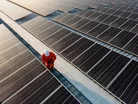
Britain experienced consecutive solar generation records in April as the country accelerates its transition to renewable energy infrastructure. The timing could mean the nation is beginning to address energy security concerns through domestic low-carbon generation.
According to the electricity system operator, solar farms across England, Wales and Scotland produced 14.1 GW at lunchtime on 6 April. The figure exceeded the previous record of 14 GW set in July 2025.
The record lasted less than 24 hours. Output reached 14.4 GW on Tuesday afternoon, establishing a new national high.
The achievements coincided with approval for what will become the largest solar installation in the UK by generation capacity. The Springwell Solar Farm in Lincolnshire received government authorisation on the same day as the first record.

Largest UK solar farm approved
The Department for Energy Security and Net Zero granted approval for the 800-megawatt project through a Development Consent Order. EDF Power Solutions and Luminous Energy are jointly developing the site.
The installation will occupy 1,280 hectares of farmland between Lincoln and Sleaford, near Navenby. According to the developers, this equates to roughly 1,700 football pitches.
At maximum capacity, the site could generate sufficient electricity to power around 180,000 homes per year. This represents approximately half the households in Lincolnshire.
The project includes a battery storage facility. EDF has committed to delivering 12 km of new footpaths and more than 15 km of new hedgerows as part of environmental mitigation measures.
Matthew Boulton, Director of Storage, Solar and Private Wire at EDF Power Solutions, welcomed the decision. "I would like to thank everyone who took part in the public examination process and consultations," he says.
"As the project moves forward, we remain committed to working collaboratively with local communities and partners to reduce the impacts of construction while delivering long-term benefits for the region," Matthew adds.
Local opposition to land use
The approval followed considerable local resistance. Lincolnshire residents raised concerns about the loss of agricultural land, landscape changes and safety risks associated with the lithium-ion battery storage facility.
Marc Williams, a spokesperson for the Springwell Solar Action Group, describes himself as "disgusted" at the decision. He vows to "keep fighting this".
Local Conservative councillor Rob Kendrick spoke against the project at the public inquiry. He calls the outcome "sad news for Lincolnshire and its residents".
"Tourism is worth US$2bn to Lincolnshire and that will be impacted," he explains.
Energy Secretary Ed Miliband has made tackling NIMBYism a priority since Labour took office in 2024. The term refers to the not in my backyard attitude of locals opposed to infrastructure projects.
"We will take on the blockers, the delayers, the obstructionists, because the clean energy sprint is the economic justice, energy security and national security fight of our time," he notes.
Sustainability leaders won’t want to miss Sustainability LIVE: The Leadership Summit at London Climate Action Week, taking place at Code Node on 25 June 2026.
Register now for this exclusive invite-only event.
Accelerating renewable energy infrastructure
Springwell represents the 25th large-scale clean energy project approved by the Labour government since July 2024. According to the government, these approvals could generate enough electricity to power the equivalent of 12.5 million homes.
The figure relates to the administration's target of a virtually carbon-free grid by 2030. The electricity system operator is understood to be preparing to run the grid without any gas generation for short periods as early as this summer.
Energy Minister Michael Shanks framed the Springwell approval in terms of both energy security and climate policy. "We are driving further and faster for clean homegrown power that we control to protect the British people and bring down bills for good," he says.
"It is crucial we learn the lessons of the conflict in the Middle East – solar is one of the cheapest forms of power available and is how we get off the rollercoaster of international fossil fuel markets and secure our own energy independence," Michael adds.
The UK is adapting to energy challenges created by ongoing conflict in the Middle East. The British Government, along with several others around the world, is looking to bolster its energy independence as trade security appears less certain.
Springwell is currently expected to begin exporting electricity to the national grid in 2029.