Venezuela's Oil & Gas Mining Law Threatens Amazon Ecosystem
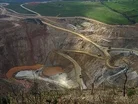
Venezuela's government-controlled National Assembly has passed a mining law to open the country's mineral reserves to private and foreign investment. The legislation replaces regulations from 1999 and 2015.
The country holds substantial deposits of gold, coltan and bauxite across a region that includes 11.2 million hectares of rainforest. According to Amazon Conservation's Monitoring of the Andes Amazon Programme, mining activity led to 9,531 hectares of deforestation in 2024.

Legal framework for extraction
The new law permits domestic, foreign, state-owned and private companies to extract materials under concessions lasting up to 30 years. Companies will pay royalties of up to 13% of gross production value and a 6% tax on gross revenue.
Acting President Delcy Rodríguez approved the legislation following pressure from the US to liberalise the economy after the arrest of former leader Nicolás Maduro earlier this year. In January, Venezuela passed a hydrocarbons law reducing state control over oil and gas exploration.
The country hosts the world's largest oil reserves but has not developed industrial-scale mining. The new law aims to attract capital to exploit coltan, used in smartphone and automotive electronics, and bauxite, the primary source of aluminium.
US Interior Secretary Doug Burgum met with Rodríguez in March to discuss normalising relations. "I'm feeling very optimistic about an environment where investment is going to flow not just to offshore oil and gas, not just to Caucus, but actually to the interior where these enormous resources exist," he says.
Sustainability leaders won’t want to miss Sustainability LIVE: The Leadership Summit at London Climate Action Week, taking place at Code Node on 25 June 2026.
Register now for this exclusive invite-only event.
Minerals and diplomatic relations
Doug described Venezuela's position in global supply chains during the March meeting. "The people of Venezuela have been resourceful in trying to protect their own resources from the hyperinflation that's occurred," he says.
"But I think the faster that we can move on normalising relations, the faster you're going to see the gap between the official and the unofficial currency rate close."
He referenced a ministerial meeting at the State Department where 51 countries signed agreements on critical minerals. "We saw at the ministerial that was held at the State Department with Marco Rubio a few weeks ago, 51 countries coming to Washington DC wanting to sign agreements where nations could trade freely with the price floor around critical minerals, the resources that are here around not precious metals like gold, but critical minerals in this country and minerals that you need like bauxite for aluminium for defence and for advanced manufacturing and for your laptop," Doug says.
"And if people don't understand critical minerals, just understand that every phone and every camera that you're pointing at me right now has got rare earth minerals in it. It's not just for defence and for computers. Everybody needs to have a secure supply of these to keep the global economy going. The United States is committed to leading in that area."
Environmental impact and transparency
Venezuela's main mineral reserves sit in Bolivar and Amazonas states, extending across the Orinoco Mining Arc. The legislation describes a commitment to "ecological mining development" but environmental groups have questioned this language.
The law includes provisions for environmental impact assessments and consultation with Indigenous communities. These requirements do not need to occur before operations begin or contracts are signed.
Critics of the amendments argue the law reduces transparency in mining operations. This could prevent citizens from accessing information about activities in their regions.
The deforestation figure from Amazon Conservation's programme suggests existing mining has affected forest cover. The new law could expand extraction activities across areas that currently lack industrial operations.
The law creates a simplified tax structure compared to previous regulations. Companies entering Venezuela will need to assess how operations interact with forest ecosystems and Indigenous populations.
The absence of mandatory pre-operational environmental reviews could mean assessments occur after extraction begins. This timing could affect the ability to prevent environmental damage.
Investors considering participation will need to evaluate how concessions affect rainforest preservation. The 30-year timeframe for concessions suggests long-term operations across ecologically sensitive areas.
Venezuela's position as a supplier of oil and critical minerals could develop under the new framework. The environmental cost of this development remains unclear under current provisions.