VMO2’s "Every Device Lives Twice" Challenge

The traditional linear economic model of "take, make, dispose" has hindered the telecommunications industry. For decades, the sector has relied on frequent upgrades, often discarding functional hardware in favour of newer models.
This is changing as the spotlight increasingly turns to supply chains and circularity. As electronic waste becomes the world’s fastest-growing waste stream, circularity is shifting from a peripheral concern to a central operational strategy.
Virgin Media O2’s latest ESG roadmap, the Responsible Business Plan, outlines the company’s plan to tackle e-waste.
The strategy aims to ensure that every device lives twice. This is a targeted effort to double sales of refurbished devices and tech recycling by 2030.
By making circularity a core business driver, the company challenges the industry’s dependence on new hardware and recognises that the most sustainable device is the one already in use.

Making second-hand mainstream
While many firms have piloted small trade-in schemes, Virgin Media O2 aims to industrialise the second-hand market.
The VMO2 Recycle programme has already diverted millions of devices from landfill, but new targets focus on making refurbished technology a mainstream consumer choice.
Achieving this will require improvements in reverse logistics, quality assurance, and consumer marketing to address the stigma around used electronics.
A key innovation in this circular approach is the focus on local ecosystems. The company plans to promote device reuse in 30 UK cities by the end of the decade, following a successful pilot in Coventry, UK.
This strategy shifts from centralised recycling to community-based redistribution.
By keeping technology within local economies and providing it to those in need, the company addresses both environmental impact and digital poverty.
This dual-purpose model transforms a waste management challenge into an opportunity for social value.
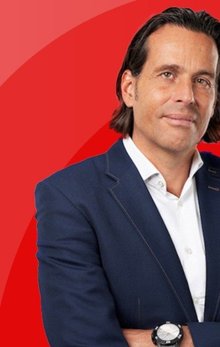
“Our Responsible Business Plan is more than a strategy – it’s how we do business,” says Lutz Schüler, CEO of Virgin Media O2.
“It’s built into every decision we make, how we treat our customers and employees, and the products and services we provide to people across the country.
“Whether it’s cutting carbon and working towards net zero, helping even more low-income households stay connected, or giving technology a second life – Virgin Media O2 is committed to being a trusted business and a force for good in people’s lives.”
Since hardware manufacturing contributes to industry emissions, extending device lifecycles is an effective way to reduce environmental impact.
Refurbishing and reselling devices as "like new" spreads the carbon cost of production over a longer period, significantly lowering the carbon intensity per customer.
VMO2 dials in on 2040 target
While circularity is a major part of the new strategy, it is supported by a strong commitment to decarbonisation.
The company now aims to achieve net zero carbon emissions across all operations and its supply chain by 2040.
This target, set a decade ahead of many international benchmarks, requires upstream partners and equipment manufacturers to meet VMO2’s standards.
By combining these goals of accelerating the circular economy and ensuring supply chain transparency, the company demonstrates that sustainability is now central to its strategy.
Company portals

Executives
Lutz Schüler
Chief Executive Officer