EV Endurance: Why Volkswagen’s ID.3 Pro S Impressed ADAC
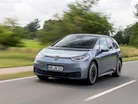
ADAC has released its findings on the endurance of Volkswagen’s ID.3 Pro S, which has covered more than 160,000 kilometres in four years.
At the Test and Technology Centre in Landsberg am Lech, Germany, the EV's battery exhibited impressive longevity and performance.
The manufacturing of batteries can have a significant environmental impact and increased battery longevity can help to reduce this.
ADAC found that the ID.3 Pro S has 91% net capacity retention after four years or 160,000 kilometres.
An expected 70% capacity is retained at eight years or 160,000 kilometres.
“The result shows the impressive quality of our ID. models even after covering many kilometres,” says Martin Sander, member of the Volkswagen Board of Management responsible for Sales, Marketing and After Sales.
“A high battery capacity of over 90% after 160,000 kilometres confirms that our ID. models are also very attractive as used cars and continue to meet the requirements of our customers.”
ADAC’s testing process
To reach 160,000 kilometres as quickly as possible, ADAC used rapid charging stations to charge the ID.3 for more than 40% of the charging sessions.
The ID.3, occasionally held at full charge for extended periods, contrary to recommended practices, to mirror more extreme user scenarios.
Between test drives, the ID.3 was repeatedly checked by engineers with particular focus on its battery condition.
This endurance test was a first of its kind for an ID. family vehicle.
ADAC recommendations for customers
ADAC recommends that customers should install software updates.
During the endurance test, the ID.3 received several software updates, including the Electric Vehicle Route Planner, which plans the charging stops.
Alongside bug fixes, the updates included an increase in charging capacity to up to 170 kW.

Other benefits of updating included a positive effect on consumption and, therefore, range.
The new software significantly improved power consumption over short distances and in winter temperatures from 0 to 5°C.
Additional positives highlighted by ADAC included the condition of the body and chassis after testing, as well as the axles, suspension and steering coping well with the vehicle weight.
Why does battery performance matter?
Battery performance is one of the most critical factors influencing the success and adoption of EVs.
It directly affects an EV's driving range, charging speed, longevity and overall cost of ownership.
A high-performing battery ensures that drivers can travel long distances with fewer charging stops, making EVs more practical and appealing.
However, maintaining battery health over time remains a challenge.
Lithium-ion batteries naturally degrade with each charge cycle, leading to reduced capacity and range.
Factors such as frequent fast charging, extreme temperatures and poor charging habits can accelerate this degradation.
As battery performance declines, so does the car’s value, especially in the used vehicle market.