
How Watershed's AI Agents Automate Sustainability Data
The daily reality of sustainability leadership is defined by the tribulation of data management. Teams find themselves trapped in the cycle of collecting, cleaning and correcting datasets rather than focusing on the vital work of decarbonisation.
Business sustainability platform Watershed wants to flip this script by introducing a suite of artificial intelligence (AI) agents designed to automate some of the most time-consuming aspects of the sustainability workflow.

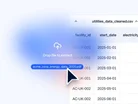
Watershed focuses on two primary areas where doing it manually often stalls progress: data cleaning and data analysis. Its agents allow users to process real-world data—often arriving in fragmented or disorganised formats—and transform it into decision-ready insight. According to Watershed, these tools have already cut the time to actionable data by 80% across trial cases.
“The goal is simple: help sustainability teams spend less time on data and more time driving decarbonisation,” says Taylor Francis, Co-Founder at Watershed.
“Watershed agents give teams more leverage, so they can move faster on the work that matters most.”
Tangible outcomes from early tests
For business leaders, the most significant impact is the reclaiming of time. Christian Boothby, Sustainability Manager at engineering firm Smiths Group, notes that the agents are “helping me save about 12 weeks per year”.
This efficiency has tangible outcomes for corporate strategy. “That means I’ve now got time to work with our manufacturing and engineering teams on decarbonisation strategy and energy efficiency projects across our sites,” says Christian.
Watershed’s data cleaning agent is built to handle the granular complexities that break traditional spreadsheets, such as unit conversions. It simplifies sources and fills gaps using documented assumptions.
A key example of this in practice was seen at Royal Mail, the UK’s postal service, where Climate Strategy Lead Emma Bayliss-Chan reports that last-minute business travel data, which previously would have taken all night to account for, was built into a file in minutes.
Sustainability leaders won’t want to miss Sustainability LIVE: The Leadership Summit at London Climate Action Week, taking place at Code Node on 25 June 2026.
Register now for this exclusive invite-only event.
Bespoke platform versus off-the-shelf
Beyond cleaning, Watershed’s agents allow users to ask the AI to identify decarbonisation hotspots or flag anomalies. One early customer noted that the insights these agents provided would otherwise have required the efforts of three analysts over multiple weeks, Watershed reports.
Watershed emphasises that the agents are "purpose-built" for the reporting sector, distinguishing them from general-purpose AI. The system is underpinned by a database of more than 500,000 emissions factors covering 95% of global GDP. To ensure the output is audit-ready, every transformation includes full data lineage and checks.
“Watershed agents have our data context and the sustainability insights and intelligence that general-purpose AI doesn't,” says Emma.
Lessons in AI
Recognising that technology alone cannot solve the climate crisis, Watershed has also addressed a significant human barrier. A survey of more than 200 global sustainability leaders found that 37% of respondents viewed an internal skills gap as a limiting factor in AI adoption. In response, the company has announced the Watershed AI Fellowship, an eight-week accelerator programme.
This fellowship provides a small cohort of Watershed customers with direct access to climate science experts and AI product leaders. The goal is to help professionals become AI leaders within their own organisations, pioneering new use cases and setting standards for the responsible use of the technology.
By automating the mechanical tasks of data ingestion and reporting, AI agents are designed to empower leaders to focus on the breakthroughs required for a transformational decade.
Company portals



Executives

Taylor Francis
Co-Founder