
What Are Colgate-Palmolive’s Sustainability Plans For 2030?
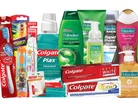
Colgate-Palmolive centres its operations around building a healthier future for the planet, people and pets.
As part of its ongoing commitment to sustainability, it has published its 2025 Sustainability & Social Impact Report, which concludes its 2020-2025 strategy and looks ahead to 2030.
Ann Tracy, Chief Sustainability Officer at Colgate-Palmolive, says: “In 2020, we set out an ambitious and comprehensive Sustainability & Social Impact Strategy focused on priority actions and targets to accomplish by the end of 2025.
“We are proud of what we have achieved, but we know there is more work to do.
“In this report, we share a final update on our 2025 Sustainability & Social Impact Strategy and introduce our 2030 targets to drive progress across our three key ongoing ambitions: Driving Social Impact, Helping Millions of Homes and Preserving our Environment.”
Colgate-Palmolive’s targets and achievements
Colgate-Palmolive’s 2030 strategy aims to build upon the success of its 2025 strategy, delivering growth while building resilient supply chains.
By 2025, the company aimed to reach two billion children and families to improve oral health and advance the health and wellbeing of children, their families and communities.
It has achieved this target, reaching approximately two billion children and their families since 1991.
Throughout its 2025 Sustainability & Social Impact Strategy, Colgate-Palmolive has contributed more than US$250m to the communities where it operates.
In line with its strategy, the company has built consumer-facing campaigns to encourage people to turn off the tap while brushing their teeth in order to promote water conservation awareness.

Ann continues: “As we look forward to 2030, we will approach our Sustainability & Social Impact Strategy cross-functionally through the lens of the Win-Win-Win principle. Our commitment is to innovate and reimagine a healthier future for all.
“We will achieve this by offering products that are perceivably superior, working to ensure we win the trust and loyalty of the people who use them.
“We will win as a business by generating growth with our innovations and building resilient systems with our partners, helping to ensure we have resources for the future.
“Finally, by building a healthy business that seeks to meet the needs of our stakeholders, we will continue working to achieve our targets, helping the planet win through our reduced environmental impact.”
Environmental stewardship
Colgate-Palmolive has set a new 2030 target to reach 2.7 billion children and their families with education about oral health through its 'Colgate Bright Smiles, Bright Futures' programme.
It is targeting net zero carbon emissions across the value chain by 2040, reducing its absolute Scope 1 and 2 greenhouse gas emissions by 42% by 2030 against a 2020 baseline.
It plans to protect forests and biodiversity, ensuring it sources only deforestation – and conversion-free palm oil, soy and paper-based packaging materials.
For packaging, Colgate-Palmolive is rolling out recyclable paper packaging for its toothbrushes, which reduces plastic by 90-98% compared with previous plastic blister packaging.
Colgate’s first-of-its-kind recyclable toothpaste tube was first introduced in 2019 and has since become accessible in more than 70 countries worldwide.
It transitioned 98% of its toothpaste SKUs globally and 97% of its North American SKUs to the recyclable tube.
Ann told Sustainability Magazine: “As we look forward to 2030, we knew we had to make the targets that we were setting much smarter and more measurable.
“I like to say our 2030 strategy is an evolution, not a revolution, meaning we’re building on the same platform that we strive for in 2025.
“We’re increasing these targets, making them more measurable and making them more streamlined. We’re driving even further, with a sharper focus, which is key.”
Company portals

Executives

Ann Tracy
Chief Sustainability Officer