
Andy Burnham's Sustainability Track Record

After being elected leader of the UK’s Labour Party last week, Andy Burnham will move into 10 Downing Street today. He becomes the country’s seventh prime minister in the past decade.
As the MP for Makerfield, Andy served in the UK government as Secretary of State for Health and Secretary of State for Culture, Media and Sport during Gordon Brown’s time as Prime Minister (2007-2010).
His popularity with UK voters and Labour Party members grew during his nine years as Mayor of Greater Manchester (May 2017 to June 2026) in northwest England.
This rise in support helped him replace Sir Keir Starmer as Prime Minister.
What were Andy Burnham’s sustainability successes as Mayor?
While he was mayor, Andy worked to bring Greater Manchester's bus services back under public control. His team capped fares and started a major project to replace old diesel buses with zero-emission electric ones, aiming for a London-style transit system.
He supported major investments in active travel, expanding walking, wheeling, and cycling routes across the region to encourage zero-carbon commuting.

Greater Manchester, working with GMCA and SUEZ, opened the Renew Hub in Trafford Park. It is the UK’s largest waste reuse and repair center, saving tens of thousands of items from landfill each year by repairing and selling them. The Hub also provides green skills training.
As mayor, Andy's team launched large-scale retrofitting programs for public buildings and social housing to improve insulation and reduce energy use.
He also established the Energy Innovation Agency and introduced Local Area Energy Plans to expand green energy in the region.
Andy Burnham also helped create the Greater Manchester Environment Fund. This fund supports nature recovery, carbon offset projects, peatland restoration, and local biodiversity work across the city region.
Greater Manchester was often included on the global Carbon Disclosure Project (CDP) "A List" for its clear climate leadership and ambitious local policies.
What can we expect from PM Burnham?
Andy Burnham is likely to keep many of the policies from the Labour Party’s 2024 General Election manifesto.
However, some believe Andy might introduce new plans for drilling in the North Sea.
Keir Starmer implemented a ban on new North Sea oil, gas and coal exploration licenses while managing a phased transition for existing licenses. Fracking banned permanently.
According to The Guardian newspaper, specific arrangements could allow new drilling without breaking the manifesto promise. However, this could upset some Labour Party members and climate campaigners.
The main debate is about two sites, Rosebank and Jackdaw, off Scotland’s northeast coast.
In June 2025, while still mayor, Andy supported a proposed international agreement to phase out coal, oil, and gas. He called it a “lifeline” that “all governments” should join. In a video about the treaty, he also said, “there should be no turning away from net-zero”.
Labour won the election by promising zero-carbon electricity by 2030. The party also pledged to double onshore wind, triple solar power, and quadruple offshore wind by 2030. They plan to change planning rules and grid connections to speed up green infrastructure and attract private investment.
Since the 2024 election, the UK government, led by energy secretary Ed Miliband, has set up a new publicly owned energy company in Scotland. This company invests directly in renewable and new clean technologies, working with private-sector partners.
Andy Burnham’s support for giving more decision-making power to UK regions could help secure GB Energy funding for community energy projects, working with local authorities and co-operatives.
Reaction to Burnham’s appointment
Ahead of his official appointment as prime minister, Rosie Downes, head of campaigns at Friends of the Earth, said: “Since winning Makerfield, Andy Burnham has repeatedly acknowledged that his rise to power is Labour’s final chance to rebuild trust with voters who are demanding change they can feel in their immediate lives.
“But he must not make the same mistake as his predecessor by failing to communicate – and at times recognise – how solutions for tackling the climate and nature crises underpin any strategy for easing hardship, raising living standards and building a fairer, greener Britain.
“In the midst of an unprecedented summer of deadly heat, anything short of rejecting disastrous projects like Rosebank, Jackdaw and a third runway at Heathrow, and failing to bring forward an all-encompassing fracking ban, would see the new Prime Minister turning his back on precisely the communities he has sworn to help. He must stand firm or risk undermining his credibility straight out of the gate.
“We’ve seen the success he had as Greater Manchester Mayor in increasing bus use through affordable fares – this is something he should replicate nationally by introducing a £1 bus fare cap.
“Alongside this, lowering energy bills through cheap, homegrown renewable power and a new social tariff to help those on the lowest incomes, bringing water back into public ownership so we’re no longer paying through the nose just for water companies to trash our rivers and seas, and ensuring he follows through with concrete action on Palestine – including a full arms embargo on Israel and a trade ban with illegal settlements – should all be top of his priority list.”
“As one of the country's largest industrial regions, the North West is already leading the way in advanced manufacturing, energy, chemicals and low-carbon innovation ”
Jane Gaston, CEO of Net Zero North West – one of the region's leading voices on industrial growth, investment and the clean energy transition – believes Andy's appointment presents a significant opportunity to put the North's industrial strengths at the heart of national economic policy.
"Andy Burnham's appointment as Prime Minister is a significant moment for the North of England," she says. "Throughout his time as Mayor of Greater Manchester, he has consistently championed the role of regional leadership in driving economic growth, investment and regeneration. There is now an opportunity to bring that same understanding of place to national policy.
"Our recent Why Industry Matters report demonstrates just how strategically important the North West is to the UK's future prosperity. As one of the country's largest industrial regions, the North West is already leading the way in advanced manufacturing, energy, chemicals and low-carbon innovation. Building on those strengths will be essential if the UK is to improve productivity, strengthen energy resilience and remain internationally competitive.
"The region has the expertise, industrial capability and collaborative partnerships needed to deliver the next phase of the UK's clean energy transition. What businesses need now is confidence that long-term policy will match long-term investment decisions. Stable policy, faster infrastructure delivery and continued support for industrial decarbonisation will help unlock private investment and ensure opportunities are realised at pace."
Company portals

Executives
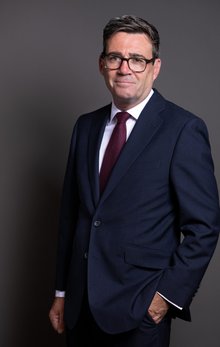
Andy Burnham
Prime Minister of the United Kingdom
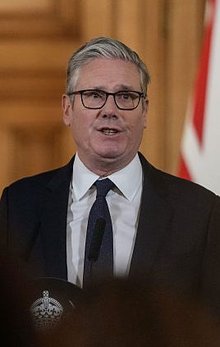
Sir Keir Starmer
Prime Minister of the United Kingdom