Why Has Be.EV Expanded its UK Charging Infrastructure?
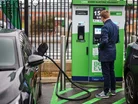
Be.EV has expanded its public charging infrastructure threefold following its purchase of Mer's operations in the United Kingdom.
The deal represents a substantial expansion of Be.EV's footprint across Southern England, complementing its existing infrastructure in the North and Midlands, which currently features more than 2,500 bays across more than 680 sites.

Growing UK charging requirements
The need for fast, high-powered public charging infrastructure is expanding rapidly across the country.
Market data from the Society of Motor Manufacturers and Traders (SMMT) indicates that hybrid electric vehicle (EV) volumes rose by 7.2% to achieve a 13.9% market share, while plug-in hybrids were the fastest growing, with volumes increasing 34.7% to take 11.1% of registrations.
Deloitte's Global Automotive Consumer Study revealed that insufficient public EV charging infrastructure and the absence of a home charger are major concerns for drivers in the UK.
Be.EV's acquisition forms part of a broader strategy to provide EV drivers with more straightforward options after making the transition from an internal combustion engine (ICE) vehicle to an EV.
Rapid charging capabilities
The acquisition of Mer positions Be.EV within the top ten providers of rapid and ultra-rapid charging infrastructure across the country.
Kristoffer Thoner, CEO at Mer, says: "We are pleased to see Mer's UK public charging network join Be.EV, a company with a strong customer-centric approach and clear ambitions in public charging.
"This transaction supports Be.EV's growth while allowing Mer to sharpen our strategic focus on our core European markets.
"Ultimately, both companies share the same goal - making EV charging simple and accessible for everyone."
Customer pricing benefits
Be.EV operates an off peak tariff of £0.39 (US$0.52) from 7pm to 7am, which will gradually become available to additional customers over time.
The company provides multiple subscription options called Mini and Mega, designed to make rapid and ultra-rapid public charging simpler and more cost effective.
Both plans unlock access to cheaper charging, with Mini offering £0.49 (US$0.65) per kWh for £4.99 (US$6.62) per month and Mega offering £0.39 (US$0.52) per kWh for £9.99 (US$13.25) per month.
Asif Ghafoor, CEO of Be.EV, writes in a post on LinkedIn: "Who cares about size, for me it's all about customers.
"We were born in the north but our network is now bigger in the south of England!!!
"Our record breaking 7pm to 7am off peak tariff of £0.39 is now available to more customers.
"The Be.EV charging experience will now be easy to access for lots more drivers. We achieved 99.1% availability on our network in 2025."
Octopus Energy Generation's Sky Fund holds a majority stake in Be.EV, positioning the acquisition as part of an accelerated strategy for the green energy transition.
According to research from McKinsey, an investment of US$9.2tn was needed in annual average spending on physical assets in order to achieve net-zero emissions by 2050.
The Sky Fund launched in 2021 and Octopus has raised more than US$2.5bn from institutional investors. Through this fund, Octopus invests in a globally diversified portfolio of renewable and energy infrastructure assets.
The portfolio includes investments in British and Dutch offshore and German and Swedish onshore wind farms as well as in developers of new solar energy projects in Ireland and Japan.
Asif says: "We're delighted to bring Mer's network into Be.EV and even more excited about what it means for drivers.
"People don't want to think about charging, they just want it to work, wherever they are. This acquisition brings the reliable Be.EV experience to more locations, and the scale we gain helps us keep charging affordable, including our off-peak and subscription pricing from £0.39/kWh.
"It's a natural fit with our network and sits alongside our continued investment in new sites and service improvements."


Executives
Asif Ghafoor
Chief Executive Officer
Kristoffer Thoner
CEO at Mer Group- powered by pure energy from Statkraft