
Will the United Nations Reach its Global Forest Goals?
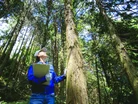
The United Nations launched its Sustainable Development Goals (SDGs) in 2015, which operate as a global call to action for countries and organisations to address environmental and social issues.
Its six Global Forest Goals (GFGs) aim to guide the sustainable management of forests and trees worldwide.
The UN has published The Global Forest Goals Report 2026, which calls for forests to remain at the centre of policy and investment decisions.

What are the Global Forest Goals?
The Global Forest Goals Report compiles data from 48 countries that together represent 51% of the global forest area.
The report outlines potential pathways for accelerating action, focusing on halting deforestation, restoring degraded lands and expanding protected and sustainably managed forests.
The GFGs were introduced in the United Nations Strategic Plan for Forests 2017-2030, which recognises forests as vital for addressing interconnected global challenges.
The six GFGs are voluntary and universal, to be achieved by 2030:
- Reverse forest cover loss
- Improve forest benefits and livelihoods
- Protect forests and use sustainable forest products
- Mobilise resources
- Promote inclusive forest governance
- Cooperate and work across sectors
Juliette Biao, Director of the United Nations Forum on Forests Secretariat, UN Department of Economic and Social Affairs, says: “As 2030 approaches, the challenge is no longer only to recognise the value of forests but to scale implementation at the speed required.
“Strengthening political commitment, financing and cross-sector coordination will determine whether the Global Forest Goals can be achieved.”
Progress on 2030 targets
Across the GFG targets and their sub-targets, the assessment found that 27% are broadly met.
It found that 65% of the targets are partially achieved, while 8% are off track.
The assessment reveals that while most targets are moving in the right direction, greater action is needed to bring some targets closer to full attainment.
For example, Target 1.1 – forest area increasing by 3% worldwide – is assessed as being off track, with total forest area decreasing by more than 40 million hectares between 2015 and 2025.
These losses of forest land were most pronounced in South America and Africa, which is most important to levels of biodiversity in these areas.
The UN says that renewed efforts must be made to halt forest loss and the loss of primary forests.
It says that in many regions, pressures from land-use change, climate impacts, wildfires, pests and illegal activities continue to threaten forests.
The assessment also found that financing for sustainable forest management remains far below the estimated needs.
Bjørg Sandkjær, Assistant Secretary-General for Policy Coordination, UN Department of Economic and Social Affairs, says: “Forests are essential to achieving the Sustainable Development Goals, from climate action and biodiversity conservation to food security and resilient livelihoods.
“Investing in forests and investing in climate stability, resilient economies and the wellbeing of present and future generations.”
What needs to happen before 2030?
The report says that national leadership and community-driven solutions have demonstrated that progress can be accelerated when ambition is matched by action.
The UN claims that this should be the way forward for many organisations, as sustainable forest management must be prioritised in the lead-up to 2030.
Achieving the goals will require accelerated action to reverse the loss of forest cover and eradicate poverty among communities dependent on forests.
Countries and organisations must work to mobilise new sources of finance to close the financing gap and strengthen forest governance and law enforcement for illegal logging, according to the UN.
As the 2030 deadline approaches, the UN says: “The challenge is no longer simply to recognise the value of forests but also to accelerate efforts to achieve the GFGs”.
It says that the most critical factors will be strengthened political commitment, increased financing and more effective cross-sectoral governance.
Company portals

Executives
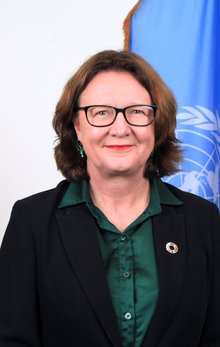
Bjørg Sandkjær
Assistant Secretary-General for Policy Coordination, UN Department of Economic and Social Affairs
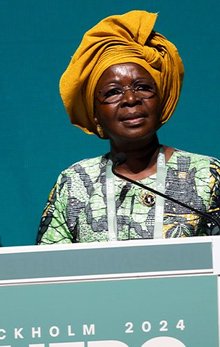
Juliette Biao
Director of the United Nations Forum on Forests Secretariat, UN Department of Economic and Social Affairs