How a Giant Aircraft could Ease Clean Energy Supply Chains
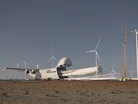
The infrastructure supporting global ground transport serves daily traffic but struggles with oversized cargo. Supply chains across the world face increasing pressure as the scale of renewable energy components expands. Wind turbines in particular present a challenge due to their sheer size and the limitations of existing logistics networks.
Radia, founded in 2016 by aerospace engineer Mark Lundstrom, sets out to change this with its WindRunner aircraft. Designed to transport the world’s largest wind turbine blades, WindRunner reaches areas that roads and railways cannot access. Traditional infrastructure can move blades around 70 metres long, but the next generation of turbines requires blades exceeding 100 metres. This creates a need to rethink how energy projects move their largest parts.

WindRunner functions not just as an aircraft but as a logistics solution for clean energy development. Its design unlocks supply chains weighed down by blades too long for ground transport. Capable of carrying blades more than 330 feet (around 105 metres) and landing on semi-prepared, unpaved airstrips as short as 1,800 metres, it enables direct delivery to remote sites.
The aircraft offers 7,700 cubic metres of cargo space, around 10 times more than a Boeing 777, and carries between 72.6 and 80 tonnes. By reaching construction zones directly, it removes the need for expensive last-mile transport from ports and highways.
Radia unveils WindRunner at the 2025 Paris Air Show and plans a first flight in 2029, with commercial service expected in the early 2030s.
Unlocking onshore wind potential
WindRunner’s impact reaches beyond aviation. It supports a broader Radia initiative called GigaWind, which refers to the deployment of the largest turbines onshore. This project adapts the scale of offshore wind farms for inland use, bringing the benefits of size and output to more accessible locations.
Onshore wind remains easier to maintain and install than offshore builds, yet it faces logistical barriers. Large blades and tall towers are difficult to move across standard road networks. WindRunner eliminates these challenges by taking equipment directly where it is needed.
Wind energy maintains appeal due to its steady generation and low cost. It supports both traditional electricity grids and new energy users such as data centres and green fuel producers. By streamlining transport for larger turbines, WindRunner allows more powerful and reliable systems to reach remote inland areas.
“Big Western wind turbine makers need direct financial support to make the investments needed to aid decarbonisation," says Tim Dawidowsky, Chief Operating Officer of Siemens Gamesa. "The supply chain is facing substantial challenges that could limit production capacity and increase turbine prices.”
WindRunner addresses this risk by enabling the transport of long turbine blades without expensive road or rail modifications. It removes bottlenecks that slow renewable projects and allows taller turbines with longer blades to reach their destinations. These upgrades increase energy output and consistency, delivering what Radia calls a “step function improvement” in both power and reliability.
Although developed for the energy sector, WindRunner’s versatility extends further. Its wide cargo bay and rugged landing capabilities make it suitable for other oversized loads, such as military payloads, disaster relief supplies and large aerospace components.
“We are essentially looking at building a platform for moving the biggest things in the world in the hardest-to-reach places," Founder and CEO Mark Lundstrom explains. "Wind turbines are some of the biggest ones, but there are other large military payloads as well.”
Building a global delivery chain
Radia backs its plans with more than US$150m in funding from early investors including LS Power, ConocoPhillips, Capital Factory, Caruso Ventures and Good Growth Capital. A Series C funding round aims to raise up to US$300m to speed up aircraft development.
The company’s progress depends on partnerships with major aerospace firms such as Leonardo, AFuzion and Aernnova. These partners support aircraft design, certification and engineering processes, ensuring WindRunner meets the strict requirements of heavy transport aviation. Alongside them, Radia builds a global supplier network dedicated to managing this unique scale of cargo.
This layered strategy—combining technological innovation, financial strength and international collaboration—positions Radia to reshape the logistics of both renewable energy and heavy cargo sectors.
By removing the physical limits of transport, WindRunner makes it possible to install the world’s largest turbines inland, away from coastlines and ports. The aircraft creates a cleaner, more connected future by transforming how the renewable energy supply chain operates.
WindRunner stands as a bridge between aerospace engineering and sustainable power generation, enabling global energy expansion without infrastructure compromise. Through its capacity, reach and adaptability, Radia sets a new standard for logistics that supports the next generation of clean energy.
Company portals

Executives
Mark Lundstrom
Founder and CEO