World Economic Forum: Climate Resilience in Business
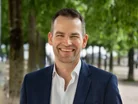
Climate risk is now at the centre of business strategy for major companies worldwide. The World Economic Forum (WEF) is actively engaging industry leaders to drive meaningful change in response to this evolving risk landscape. Sebastian Buckup, Managing Director at the WEF, leads its Centre for Nature and Climate and the organisation's Foundations, including youth networks such as Young Global Leaders and Global Shapers.
“The World Economic Forum is an international organisation for public private cooperation,” Sebastian explains. “We are working with governments, we are working with business, we are working with civil society experts, media and many others to improve the state of the world through public-private cooperation.”
Sebastian’s role involves working closely with governments, corporations, civil society experts and the media. The WEF aims for nothing less than improving the state of the world through collaboration.
The opportunity and reality of climate risk for businesses
Climate risk is reshaping the priorities of global businesses. For Sebastian, the current situation offers two major takeaways. “It's clearly a growth opportunity for many companies,” he says. “And it's also a reality – there's much more climate related regulation that companies need to cope with and companies, especially those that have large supply chains, need to build resilience to extreme weather events.”
From small nuclear reactors to green hydrogen, there is a growth opportunity when it comes to investment into clean technologies as the market for green solutions is expanding at a rapid pace. “Green markets have quadrupled in size over the last few years,” Sebastian says.
The opportunity for businesses lies not only in environmental stewardship, but in productivity gains. “Mitigation investments are, in the end, productivity investments,” Sebastian explains. As sustainability becomes a draw for top talent, companies attractive to the next generation of employees are increasingly defined by their climate credentials.
Alongside the opportunities come hand-in-hand with mounting regulatory pressure. Add to this the growing frequency of extreme weather events, and businesses are compelled to think differently about their supply chains and operational resilience.

The lesson for business and policy leaders is clear: technical solutions and funding must go hand-in-hand with renewed efforts at consensus-building. Only then can climate action remain meaningful and effective. Sebastian points out: “The biggest priority for just transition is not just funds that are about climate justice… it’s about being able to come together as a society and talk to each other and not just talk about each other.”
World Economic Forum initiatives
The WEF orchestrates a suite of programmes to drive climate and nature progress. Sebastian oversees efforts including the Global Shapers, a youth network mobilising new energy around climate goals, the Schwab Foundation for Social Entrepreneurship which supports innovation and initiatives such as Young Global Leaders.
These programmes are designed to accelerate nature-based solutions, regenerative agriculture, climate entrepreneurship and coalition action across sectors. “Our role at the Centre for Nature and Climate is to foster resilient, sustainable business models in partnership with industry,” Sebastian explains.
We will be living in an inhabitable planet without taking climate action
Global supply chains – the backbone of industries such as food, healthcare and pharmaceuticals – are feeling the real-world impacts of climate disruptions. Large companies must integrate resilience planning at the core of their strategies as the risks tied to climate outstrip previous models and assumptions.
Cross-sector investment in clean technologies is vital but fraught with obstacles. Sebastian outlines the challenges faced by companies: “There’s one type of challenge, of course, around political stability and geopolitical tensions. Long-term investment needs stable expectations.” With global politics in flux, this stability is increasingly difficult to guarantee. Financing, skills shortages and regulatory hurdles add further layers of complexity. “Companies are dealing with lots of challenges in the execution of their green strategy,” Sebastian says.
Momentum for climate action is adapting, not dissipating. “Momentum is not going down, but it’s shifting regionally as a result of technology, societal tension and so on,” Sebastian explains. China, for instance, is experiencing a renewable energy boom, driving down solar costs by 90%. Companies based in one region may not see the full global trend, reinforcing the need for a holistic, cross-border approach.
Nature-based solutions are attracting growing interest not only as a mitigation lever but as a driver of resilience and economic growth. Sebastian describes nature as “a poster child of public good problems”, where over-exploitation must be curbed. There are two dominant views: shielding nature from market forces or integrating nature into markets for constructive stewardship. He highlights carbon markets and regenerative agriculture as two key approaches.
“The Forum has done a report recently saying nature-based solutions could create business opportunity worth US$10tn a year and create 400 million jobs by 2030,” Sebastian says. Unlocking this value, he admits, is challenging. “Nature plays quite a big role in resilience,” he adds. Even in countries sceptical about international climate policy, nature preservation remains a priority because of its cultural relevance.
Partnering for climate resilience
Businesses cannot drive the transition alone. Sebastian emphasises the central role of partnerships and coalitions: “Partnerships clarify the problems, raise visibility and pool demand for solutions,” he explains. The WEF’s ‘CEOs for Nature’ group grapples with complex issues like how to put nature on the corporate balance sheet – a task far less straightforward than accounting for carbon.
The CEO Climate Leaders Alliance rallies the voices of around 125 CEOs in public letters demanding decarbonisation alongside growth. “Pooling demand is another key role,” Sebastian reveals. The WEF’s First Movers Coalition unites more than 100 companies supporting green tech for hard-to-abate sectors such as cement and steel. These collaborative networks amplify impact and push innovation where individual companies may fall short.
The importance of climate action
The costs of inaction are front and centre for Sebastian. “Without taking action on climate, we would be in a world of four degree increase by 2100,” he warns. Even current trajectories – headed for two degrees – remain “catastrophic,” particularly for poorer countries. “We will be living in an inhabitable planet without taking climate action,” he predicts. Economic consequences such as home insurability crises are already emerging in places like the United States.
The risks cannot be ignored as climate effects manifest in real time, disproportionately impacting vulnerable communities. Sebastian says: “There will be massive systemic economic challenges.” For business leaders, building climate resilience is now a commercial necessity, not just an ethical choice.
Nature-based solutions and business growth
Nature, often underappreciated in corporate boardrooms, offers tangible opportunities for adaptation and business growth. For Sebastian, nature’s role in resilience “is just moving forward”. He points out that direct benefits, such as urban tree planting, are more immediately felt than abstract investments like reducing carbon through heat pumps. “Nature is more tangible,” Sebastian says.
Major companies such as PepsiCo, AstraZeneca and Roche are active participants, engaging with the WEF’s Centers and Foundations to shape strategies that combine growth, resilience and compliance.
Optimism for the future?
Sebastian remains hopeful about the future of climate and nature action. “What gives me optimism is that a lot has actually happened,” he says. Countries such as China are seeing carbon emissions peak by 2030, and renewable costs are plummeting. Electric vehicles, once a rarity, are now mainstream in many urban environments.
“We are in a two degree scenario rather than four degrees,” Sebastian notes. While challenges remain pressing, he believes that progress to date should fuel ambition rather than despair. “The best way of being optimistic is to look actually at what’s already happening – and use that as energy to do more.”
Company portals
Executives
Sebastian Buckup
Managing Director