
World Ocean Day 2026: Strengthening Marine Protected Areas
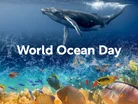
World Ocean Day, celebrated on 8 June every year, aims to unite people worldwide to protect and restore the oceans.
The ocean covers more than 70% of the planet and produces at least 50% of the planet’s oxygen.
However, 90% of big fish populations have been depleted and 50% of coral reefs have been destroyed, leaving the ocean in need of support and care.

What is this year’s theme?
This year’s action theme for World Ocean Day is Strong Marine Protected Areas for Our Blue Planet.
This brings together momentum from recent multi-year action themes, including Catalysing Ocean-Climate Action and Protecting at Least 30% of Lands, Waters and Ocean by 2030 (30x30).
At the recent UN Biodiversity Conference, the 30x30 commitments were made by global leaders, covering national waters and the High Seas – equivalent to two-thirds of the ocean.
These waters regulate the climate, support biodiversity and sustain livelihoods, showing a large potential for scientific and medical discoveries.
The World Ocean Day organisation says it is essential to establish well-regulated Marine Protected Areas (MPAs) to translate global commitments into conservation outcomes.
With collective action, accountability and sustained public engagement, this goal could be achieved by 2030, according to the organisation.
Currently, less than 17% of land and 8% of the ocean are protected – a statistic that World Ocean Day aims to change.
It aims to protect the planet’s life support systems through 30x30, addressing the interconnected issues of ocean, climate and biodiversity.
António Guterres, Secretary-General of the United Nations, said on LinkedIn: “In these turbulent times, the ocean reminds us that we are bound together.
“It shapes our climate, sustains ecosystems and economies and feeds billions. But the ocean is in deep trouble – and we are pushing it past its limits.
“On World Ocean Day, let us act with the ambition and resolve to build a new relationship with our ocean: grounded in science, framed by international law and built on shared responsibility.”
History of World Ocean Day
The concept of a World Ocean Day was first proposed by the Oceans Institute of Canada on 8 June 1992 at the Earth Summit in Rio de Janeiro.
In 2002, The Ocean Project launched the global coordination of World Ocean Day in collaboration with global partners.
The United Nations joined the movement in 2008, holding the first United Nations World Oceans Day in 2009, with the theme Our Oceans, Our Responsibility.
In 2016, the first World Ocean Day Youth Advisory Council was established, making an effort to connect and mobilise global funding and action for ocean health.
Today, the Youth Advisory Council is made up of 24 young people from 21 countries, supporting organisations with resources and tools to help celebrate the ocean and bring change through global initiatives.
Sustainability leaders won’t want to miss Sustainability LIVE: The Leadership Summit at London Climate Action Week, taking place at Code Node on 25 June 2026.
Register now for this exclusive invite-only event.
World Ocean Day at Liverpool Football Club
As part of World Ocean Day, players from Liverpool Football Club (LFC) helped deliver a workshop to local school children.
This forms part of the club’s sustainability strategy, The Red Way, in collaboration with AXA, as well as their Reds for Red campaign, which spotlights the importance of protecting coral reefs and ocean ecosystems.
At Anfield, a coral installation has been displayed, showcasing the different stages of coral reef health, including thriving coral and dying ecosystems.
Rishi Jain, Director of Impact at LFC, says: “Raising awareness across all areas of sustainability remains a key priority for the club.
“Through Reds for Red, and by working with AXA and the Tara Ocean Foundation, we’re using our global platform to shine a light on the urgent need to protect our oceans and the ecosystems they support.
“This campaign builds on our focus on SDG 14 – Life Below Water – and marks a continued step forward as we continue our efforts to advocate and champion for the ocean as part of our wider efforts through The Red Way.
“We’re proud to continue this journey and to use the platform of football to inspire action and drive meaningful, long term change.”
Company portals

Executives

António Guterres
Secretary General