
Zero Waste & Biodiversity: Why is Infosys Sustainable?

Infosys is a global leader in digital services and consulting, serving clients in 59 countries.
The company has created many sustainability initiatives at its campuses across India, working to help achieve its climate positivity targets.
Infosys has been awarded 41st place in Sustainability Magazine’s Top 250 World’s Most Sustainable Companies 2025.

Infosys’ ESG Vision 2030 targets
In its ESG Vision 2030, Infosys aims to be climate positive by 2030, going beyond net zero by reducing emissions across Scopes 1, 2 and 3 while increasing carbon sequestration.
Its target is to reduce absolute Scope 1 and 2 emissions by 90% and cut Scope 3 emissions by 40%.
In 2025, Infosys achieved its goal of being carbon neutral for the sixth year in a row.
As part of its ESG efforts, it also focuses on prioritising people and communities, with 39% women in its workforce.
The company has reached 13.3 million people with digital skills, including employees, clients, students, teachers and communities.
Salil Parekh, Chief Executive Officer at Infosys, says: “As we’ve made progress on our ESG aspirations, our vision for the future has grown bolder too.
“This is reflected in the updates that we have made to the Infosys ESG Vision 2030.
“What remains unchanged is our continued commitment to be a well-governed organisation living its purpose to amplify human potential and create the next opportunity for people, businesses and communities.”
Diverting waste from landfill
Infosys’ waste management journey began in 2013 when it introduced an “avoid, reduce and recycle plastic” approach.
Its goal is to achieve zero waste to landfill, through a wide range of initiatives both internally and externally.
To help reach this target, it has replaced single-use consumables including paper cups and plates, which has led to a 95% landfill avoidance rate.
It has implemented systems in its in-house facilities to separate all waste and recycle 100% of its organic waste.
Infosys offers internships to international students to help research and identify opportunities in waste management.
As part of its carbon reduction efforts, more than 77% of electricity for Infosys’ India operations came from renewable sources in 2025.
Nandan M. Nilekani, Chairman of Infosys, says: “Climate change and the associated energy transition adds to the crucible of uncertainties.
“So much of the future depends on innovation and the form of energy that will fuel us forward – solar, wind, batteries, pumped hydro, green hydrogen, nuclear, carbon capture and storage, etc.
“The only thing certain is that electricity will play a much bigger role in the days ahead.”
Infosys’ biodiversity efforts
In its Mangalore campus, Infosys has created a “bio-park” to nurture indigenous species and promote biodiversity.
This journey began when the company started building the campus in 2007.
Its Green Initiatives teams studied the local flora and fauna, gathering knowledge about local ecosystems and how species could be introduced into the new campus.
Today, the bio-park is home to almost 330 different species of flora and many species of fauna.
The park features coconut trees, wild plantain and different types of lilies, as well as many kinds of butterflies, birds and reptiles.
To help achieve its goal of harvesting rainwater, Infosys created seven ponds in its campus which collect water to be stored and reused.
These ponds are also home to small amphibians, birds and insects.
Infosys holds regular nature walks around the campus with members of its Green Initiatives teams, which help raise awareness and enthusiasm about the importance of the local ecosystems.
Company portals

Executives
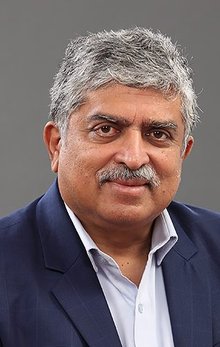
Nandan M. Nilekani
Chairman
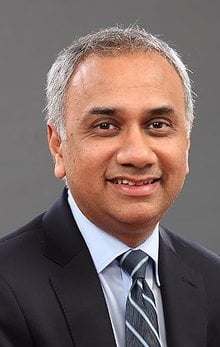
Salil Parekh
Chief Executive Officer and Managing Director