
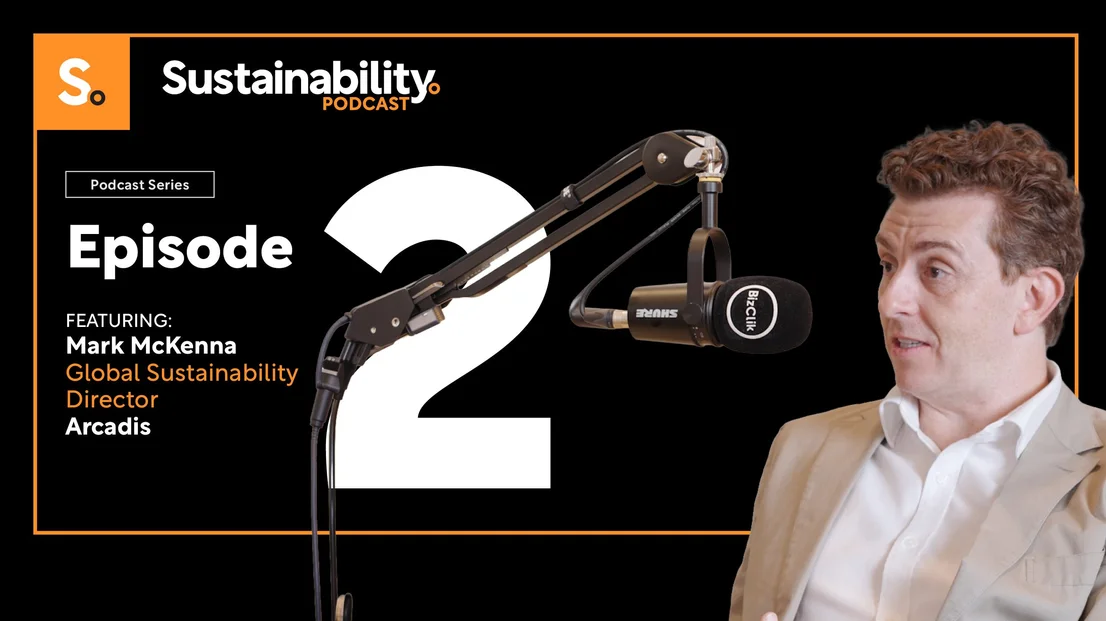
Ep. 2 | Mark McKenna: is Data the Future of Sustainability?
Related Podcasts
For sustainability leaders still relying on bold commitments and good intentions, Mark McKenna has a more useful suggestion: forget hope, it’s not a strategy – start with the data instead.
In this episode of the Sustainability Magazine Podcast, host Charlie King sits down with Mark McKenna, Global Sustainability Director at Arcadis, to talk about why the industry needs to move from broad ambitions to measurable outcomes. He also outlines what that shift actually looks like in practice.
Mark has spent his career at the intersection of design, engineering and sustainability, and brings a refreshingly direct perspective to a field that, in his words, has spent too long telling good stories at the expense of honest ones.
🎧 To listen on Spotify click here
▶️ To listen and watch on YouTube here
Moving beyond big commitments
Mark argues that sustainability has reached a turning point. Many organisations have made ambitious long-term commitments, but increasing political, economic and operational pressures mean businesses must now focus on what they can genuinely deliver. Rather than relying on broad ambitions, sustainability leaders should be transparent about where they are today and define what meaningful progress looks like. For Arcadis, that means measuring impact through projects and using consistent metrics to demonstrate real outcomes
Measuring what matters
Central to the discussion is Arcadis' Future Impact Plus framework, which focuses on five key areas:
- Carbon
- Nature
- Water
- Circularity
- Social impact
Mark explains that these themes provide an objective foundation for sustainability conversations, regardless of sector or geography. By focusing on measurable improvements, organisations can make better decisions and avoid sustainability becoming driven by opinion rather than evidence
Replacing hope with strategy
Hope alone is not a strategy. Mark believes organisations need clear plans, reliable data and defined outcomes if they want sustainability targets to become reality.
While ambitious goals remain important, success depends on understanding the starting point, tracking progress and adapting as new information becomes available.
The conversation also highlights the importance of accepting imperfect data. Waiting for perfect information can delay meaningful action, whereas using the best available evidence allows organisations to improve over time
Making sustainability a business conversation
Rather than positioning sustainability as a separate function, Mark explains that it should be discussed in the language of business. Proof points, financial value, return on investment and measurable outcomes, he says, help sustainability become part of everyday decision-making.
This approach also strengthens conversations with clients by demonstrating how sustainable choices reduce risk while creating commercial value. For Mark, sustainability and business growth are no longer separate conversations. Rather, they are increasingly the same conversation
Authentic leadership through data
Mark also reflects on how sustainability leadership is evolving. While passion remains essential, leaders increasingly need commercial understanding alongside technical expertise.
By combining evidence with practical business thinking, sustainability professionals can build stronger partnerships across organisations and create greater long-term impact. Mark also believes that authenticity matters, emphasising that businesses should focus on tangible progress rather than simply telling positive sustainability stories
Subscribe and listen
Episode 2 is brought to you by Sustainability Magazine.
Catch up on Episode 1, featuring BizClik CEO and Founder Glen White on sustainable growth, AI, collaboration and the necessity for sustainability-led business value.
Company portals

Executives
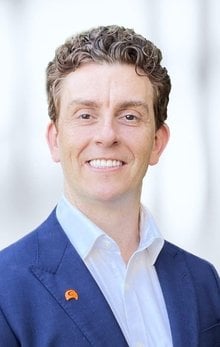
Mark McKenna
Global Sustainability Director