How IBM is Ramping Up Renewables to Power its Data Centres
Data centres are major consumers of electrical energy.
Recent figures from The International Energy Agency (IEA) reveal that data centres worldwide accounted for about 2% to 3% of the globe's electricity use, marking a noticeable increase.
This substantial energy demand stresses the power grids and heightens reliance on fossil fuels, which may hinder the transition to cleaner energy.
In response, notable tech corporations like Google, Microsoft, Meta and Apple are exploring renewable energy solutions to power their vast arrays of data servers — especially since emissions from their data centres can be significantly higher than their reported figures.
IBM's renewable strategy
IBM, which operates around 60 data centres globally, is determined to make its operations more sustainable.
With a bold target to achieve net zero carbon emissions by 2030, IBM is investing in renewable energy projects.
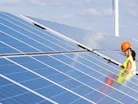
One significant step is a partnership with Clean Energy Capital to potentially bring a solar farm online that would not only supply renewable energy to one of its UK data centres but also to a nearby office.
This project, envisioned to be located at Home Farm near the IBM Hursley site, would generate almost five million kWh of energy annually, saving the equivalent of around 46,000 tonnes of CO₂ or planting circa 60,000 trees over the scheme’s lifetime”.
“We have submitted a planning application seeking permission for a solar development for a time limited 40-year term on land at Home Farm, around 500 metres from the IBM Hursley site,” Clean Energy Capital says.
“The energy produced would directly power the IBM Hursley site, including IncuHive and the Hursley Sport and Social Club, providing further local benefits.”
The proposed solar farm, designed to be symbiotic with its environment, includes measures such as landscape buffers and additional screening to integrate smoothly with the local scenery and heritage while preserving the ecological balance.
The role of IBM Hursley

The IBM Hursley site is not only a critical operational hub for IBM but also a site steeped in significant technological heritage.
This historic facility — an 18th-century Queen Anne-style mansion known as the ‘Hursley House’ has, since its inception in 1958, been at the forefront of technological innovations, playing a pivotal role in the creation of technologies such as the Customer Information Control System (CICS) which powers ATMs globally.
Today, the Hursley site's focus is pivoted towards sustainable practices in line with IBM’s broader environmental goals.
Colin Holyoake, Data Centre Design and Sustainability Manager at IBM says: “The IBM Hursley Data Centre is already making remarkable strides towards carbon neutrality by implementing practices like removing redundant infrastructure, adopting innovative cooling systems and leveraging AI to optimise performance.
“The approach has been holistic and systematic. Reevaluating existing infrastructure is crucial and the industry should prioritise operational efficiency over constructing new buildings.”
IBM's pledge for a greener tomorrow
IBM’s strategy towards sustainability is clearly marked by its commitment to renewable energy.
By the close of this year, IBM plans to source 75% of its electricity from renewable sources, increasing to 90% by 2030.
IBM's commitment goes back to its very first purchase of renewable electricity in 2001.
“I am proud that IBM is leading the way by taking actions to significantly reduce emissions,” says Arvind Krishna, IBM’s Chairman and CEO.
“The climate crisis is one of the most pressing issues of our time.
“IBM’s net zero pledge is a bold step forward that strengthens our long-standing climate leadership and positions our company years ahead of the targets set out in the Paris Climate Agreement.”
In 2023, almost three quarters of the electricity used in IBM data centres was derived from renewable sources, showcasing a significant improvement from the previous year.
As well as this, 28 of its data centres globally were powered entirely by renewable energy.
IBM says: “We remain on track to meet our current goal of procuring 75% of our worldwide electricity consumption from renewable sources by 2025, and 90% by 2030.
“Performance in 2023 was primarily driven by an increased use of renewables in our offices in India and in two IBM Cloud data centers in the United States.
“Even though we strive to do so one day, it is not possible today or in the foreseeable future for IBM to actually consume 100% of electricity from renewable sources given our physical presence in more than 100 countries along with the need for uninterrupted power, which is usually only made possible today by the use of fossil fuel and nuclear generation sources.”
Explore the latest edition of Sustainability Magazine and be part of the conversation at our global conference series, Sustainability LIVE.
Discover all our upcoming events and secure your tickets today.
Sustainability Magazine is a BizClik brand