
Scope 3 emissions are the greenhouse gases caused by suppliers, customers and end users related to a company's activity within their supply chain.
It often accounts for the majority of a business's total emissions, covering a product's entire journey from sourcing to end of life.
To help organisations measure and manage their Scope 3 emissions, companies are developing tools and solutions for emissions reduction.
Sustainability Magazine has ranked the Top 10 Scope 3 solutions from leading global companies.
10. Carbmee
Founded: 2021
CEO: Dr Christian Heinrich
HQ: Berlin, Germany
Carbmee EIS is an AI-native system that connects products, sites and supply chains with a company's transactions, aiming to make environmental data a strategic asset.
It offers full emissions visibility across operations and the value chain, measuring Scope 3 emissions from supplier and procurement sources to deliver data that is ready to report.
It also integrates key environmental KPIs such as circularity, repairability, recyclability and renewable energy use into the reporting process, allowing companies to manage their overall impact.
9. Gravity
Founded: 2022
CEO: Saleh ElHattab
HQ: San Francisco, California, US

Gravity is an AI-powered carbon accounting and energy management platform, automating supply chain data collection.
It uses AI to extract data from invoices and spreadsheets, which allows companies to measure and reduce their indirect emissions while lowering their operating costs.
It cuts down the time needed for Scope 3 reporting, using smart surveys, calculation toolkits and progress tracking, helping customers manage their portfolios of services and products.
8. Greenly
Founded: 2019
CEO: Alexis Normand
HQ: Paris, France
Greenly manages emissions reporting and sustainability strategy across a wide range of sectors, streamlining data management for global organisations.
It can help reduce manual resource needs by up to 93% and reduce costs related to carbon management and compliance by up to 52%.
Greenly's EcoPilot AI can transform data into clean, measurable categories, integrating supplier data to forecast emission trajectories, which helps companies build a comprehensive sustainability strategy.
7. Sweep
Founded: 2020
CEO: Rachel Delacour
HQ: Montpellier, France
Sweep can help organisations centralise and manage their Scope 3 emissions across their increasingly complex value chains.
The platform can collect supplier data, engage partners in reduction efforts and stay compliant with reporting standards.
It features collaborative emissions reduction tools, enabling customers to set shared targets and track progress across different Scopes.
6. Watershed
Founded: 2019
CEO: Christian Anderson
HQ: San Francisco, California, US & London, UK
Watershed aims to streamline carbon reporting using AI-accelerated report drafting and recommendations.
As well as Scope 3 metrics, it measures any data point across environmental, social and governance areas, analysing and tracing data.
It helps organisations manage their climate disclosures, reducing manual work and reducing the risk of errors in emissions data.
5. EcoVadis
Founded: 2007
CEOs: Pierre-François Thaler & Frédéric Trinel
HQ: Paris, France

EcoVadis's Carbon Action Manager collects data to enable companies to measure, collaborate and achieve measurable Scope 3 reductions.
Customers can analyse their carbon hotspots for each industry and country, as well as identify which suppliers are driving the largest emissions within the supply chain.
Its Carbon Estimator tool estimates Scope 1, 2 and 3 emissions and baseline performance, creating benchmark carbon emissions to measure progress.
4. Oracle
Founded: 1977
CEOs: Clay Magouyrk & Mike Sicilia
HQ: Austin, Texas, US
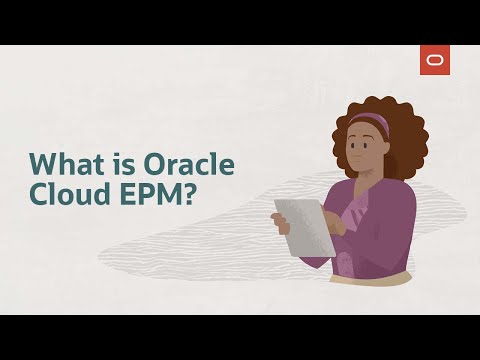
Oracle Fusion Cloud Enterprise Performance Management (EPM) helps customers integrate their financial and non-financial data, allowing them to plan and manage their ESG practices.
It can prepare data and metadata by data transforming and mapping, controlling data quality through validation rules.
Fusion Cloud operates within end-to-end workflows, connecting the entire business including finance, supply chain, manufacturing, sales, services and marketing.
3. Salesforce
Founded: 1999
CEO: Marc Benioff
HQ: San Francisco, California, US

Within its Net Zero Cloud software, Salesforce offers a Scope 3 Carbon Footprint tool.
This allows companies to manage and measure their upstream emissions data and allows subsidiaries, business units and franchisees to report on their real-time emissions.
The Net Zero Cloud enables organisations to calculate their carbon footprint, develop emission reduction strategies and reporting on sustainability metrics to key stakeholders.
It automates reporting and aligns with changing regulations and frameworks.
2. IBM
Founded: 1911
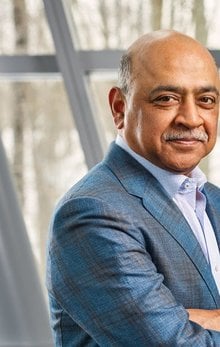
CEO: Arvind Krishna
HQ: Armonk, New York, US
IBM's Envizi platform enables Scope 3 greenhouse gas accounting and reporting, leveraging AI to bring efficiency to emissions calculations.
Through the platform, Scope 3 emissions are automatically calculated using the relevant GHG Protocol method, with AI-driven Natural Language Processing (NLP) models supporting data categorisation.
It provides summaries of calculation accuracy, helping customers improve their sustainability reporting accuracy year-on-year and identify any data governance issues.
It brings multiple benefits including automated calculations, streamlined data categorisation and identifying emissions hotspots.
1. Microsoft
Founded: 1975
CEO: Satya Nadella
HQ: Redmond, Washington, US
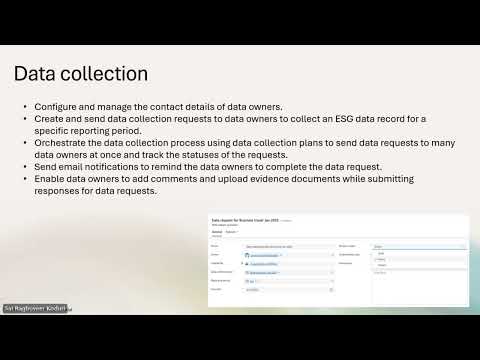
Microsoft's Sustainability Manager allows companies to calculate their Scope 3 emissions, storing emission data for any category.
Its activity data model can help calculate purchased goods and services and capital goods, using United States Environmental Protection Agency (EPA) supply chain factors.
This helps customers to work towards climate neutrality and net zero, taking all Scope 3-related factors into account, including upstream and downstream transportation, end-of-life treatment, use of sold products and fuel- and energy-related activities.
The Sustainability Manager tool allows customers to view trends in the emissions data by comparing year-on-year emission levels, as well as separating data by category.







Executives

Alexis Normand
CEO and Co-Founder
Arvind Krishna
CEO
Christian Anderson
Co-Founder

Christian Heinrich
CEO

Clay Magouyrk
CEO

Frédéric Trinel
Co-Founder and Co-CEO
Marc Benioff
Chair & CEO

Mike Sicilia
Chief Executive Officer
Pierre-Francois Thaler
Cofounder & Co-CEO

Rachel Delacour
CEO
Saleh ElHattab
Founder, CEO
Satya Nadella
Chairman and CEO