
Brewing Tomorrow: Carlsberg Group’s Updated ESG Strategy
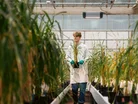
Carlsberg has launched Brewing Tomorrow, which is its updated ESG programme, aiming to reduce the company’s impact on the planet and people.
This comes after its 2025 acquisition of Britvic, which has expanded Carlsberg’s beverage portfolio into a more complex one, consisting of 30% soft drinks.
The acquisition has added nearly one million tonnes of CO₂e emissions to its value chain, which is a 16% increase.

Carlsberg’s sustainability commitments
To adapt to the changes within its beverage portfolio, Carlsberg has moved its target year from 2030 to 2032.
Its commitment to a net zero value chain by 2040 remains the same under the new plan.
Brewing Tomorrow introduces updated Scope 3 reduction targets in line with SBTi requirements.
It also strengthens Carlsberg’s commitments to regenerative agriculture and recycled materials, as well as introducing sugar-reduction goals for its soft drinks portfolio.
Jacob Aarup-Andersen, CEO of Carlsberg Group, says: “Carlsberg is on an exciting journey.
“We are evolving as a company, with a broader portfolio and a wider geographic presence.
“Brewing Tomorrow is our sustainability roadmap of action, built on strong performance in the recent years.
“The aim is clear: to drive impact and ensure Carlsberg is a future-ready business.”
The Brewing Tomorrow roadmap
Brewing Tomorrow is built around four main pillars:
- Cutting carbon – reducing emissions and building climate resilience
- Protecting nature – restoring ecosystems by focusing on regeneration and water stewardship
- Inspiring choice – enable informed and mindful consumption
- Empowering people – building a safe, respectful and inclusive growth culture
Changes within the Brewing Tomorrow programme include adding compostable packaging into its recyclable and reusable packaging targets.
Its new target is to have 100% recyclable, compostable or reusable packaging by 2032.
It has increased its raw materials target from 30% to having 50% of its raw materials sourced from regenerative agricultural practices.
Carlsberg’s emission reduction targets are to have a 90% reduction in emissions from its own operations and a 31% reduction in its value chain emissions by 2032.
Simon Boas Hoffmeyer, VP, Group Sustainability and ESG at Carlsberg Group, says: “With Brewing Tomorrow, we are building on our learnings from the past, while updating our focus for the future.
“The programme is embedded in our business: how we run our operations, how we engage across our value chain, how we develop our people and how we create more choice across our expanding portfolio.
“It builds on decades of reducing our impacts, while supporting our business growth.
“I am proud of the journey we are on and cannot wait to bring it to life with colleagues and partners across the world.”
2025 sustainability achievements
Carlsberg’s 2025 performance highlights align with its new priorities in its Brewing Together programme.
It achieved a 12% reduction in absolute emissions at its production facilities and an 8% reduction in absolute near-term value chain emissions since 2024.
The company sourced 90% of its electricity from renewables and signed three new power purchase agreements (PPAs) in Norway, Finland and Sweden.
It also achieved 51% recycled content in its bottles and cans in 2025, surpassing its 2030 target of 50% five years ahead of schedule.
In its goal to protect nature, Carlsberg procured 27,600 tonnes of barley grown with regenerative principles in 2025, doubling the amount from 2024.
During the year, Carlsberg also continued to expand its regenerative farming pilots in France, the UK, Finland and Denmark.
It increased its share of no- and low-alcohol brews to 31% of its global sales, working towards its goal of inspiring choice in consumers.
Carlsberg continued to build upon its partnerships and campaigns for responsible drinking in 2025, encouraging conversations about alcohol consumption and moderation.
Company portals

Executives
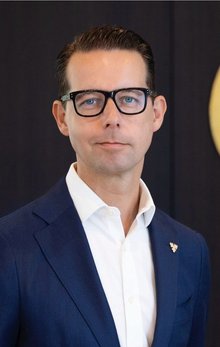
Jacob Aarup-Anderson
Group CEO

Simon Boas Hoffmeyer
VP, Global Head of Sustainability and ESG