Climate & Circularity: Carlsberg Group’s Annual Report

The global beverage industry produces approximately 1.5 billion tons of CO₂e annually, which represents around 3.8% of total emissions, according to CDP.
To tackle this issue, companies like Carlsberg Group have developed sustainability targets and initiatives to cut their carbon emissions.
The brewing company has released its 2025 Annual Report, which outlines its progress towards its climate and waste reduction targets.
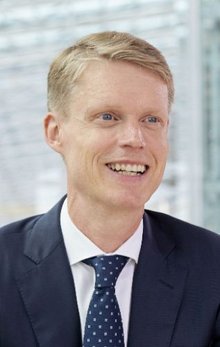
Henrik Poulson, Chair of Carlsberg Group, says: “We’re strengthening Carlsberg for the long term, aligning our strategy around a broader portfolio, strong capabilities and rigorous execution.
“The Board is confident that this will make Carlsberg even more resilient, benefit our customers and consumers and deliver compounding earnings growth and value for our shareholders.”
What are Carlsberg’s sustainability goals?
Carlsberg Group is aiming towards a net zero value chain by 2040.
To reach this target, it has set short-term goals including having zero carbon emissions at its breweries, ensuring all of its electricity comes from new, renewable sources and achieving a 30% reduction in relative value chain carbon emissions by 2030.
It also aims to promote regenerative agriculture practices within its food production value chain.
Its 2040 targets are to have 100% of its raw materials from regenerative agricultural practices and to have 100% of its raw materials sustainably sourced.
This covers all direct raw materials globally, including its supply of malt, barley, wheat, rice, sugar, syrup, corn and hops.
To achieve this, it is collaborating with players in its value chain to embed sustainable farming practices such as the use of low or no tilling, cover crops, crop rotation and minimal use of fertiliser or pesticides.
Simon Boas Hoffmeyer, VP, Global Head of Sustainability & ESG at Carlsberg Group, writes on LinkedIn: “ESG is a marathon, not a sprint – true progress comes from consistency and focus on day-to-day implementation.
“Looking back at 2025, I’m genuinely proud of what our teams across Carlsberg Group have achieved.
“Organically we have seen progress across the board. None of these results happen overnight; they come from thousands of small decisions, tough prioritisation and colleagues who care deeply about doing things the right way.”
Simon Boas Hoffmeyer has been ranked in Sustainability Magazine's Top 250 Leaders list. Read the full list here.
Decarbonising operations
Carlsberg Group’s climate transition plan is anchored in its ESG programme, Together Towards ZERO and Beyond.
Its main target in reducing its carbon footprint is to have zero carbon emissions from its beverage production in its breweries.
This target covers 92% of its 2015 baseline Scope 1 and 2 emissions.
In order to decarbonise its facilities, Carlsberg has been working on energy efficiency improvements, transforming fossil-based energy sources to electricity or renewable energy and technological innovations like heat pumps.
It has installed electric boilers and biomass boilers at certain sites, as well as working towards installing biogas recovery systems at its wastewater treatment plants.
All sustainability, net zero and sustainable supply chain leaders should attend:
- Sustainability LIVE: The Net Zero Summit - QEII Centre, London, March 4-5
- Sustainability LIVE: The US Summit - Navy Pier, Chicago, April 21-22
Co-located with Procurement & Supply Chain LIVE, these events brings together CSOs, ESG leaders and senior decision-makers at a moment when sustainability, supply chains and commercial performance are increasingly interconnected.
Tickets can be booked online today for The Net Zero Summit and The US Summit. Group discounts available.
Targeting circular packaging
By 2030, Carlsberg Group aims to have 100% recyclable, reusable or renewable packaging and a 90% collection and recycling rate for bottles and cans.
It also has set a goal to have 50% recycled content in bottles and cans, as well as a 50% reduction in virgin fossil-based plastic.

Carlsberg has been developing solutions for its PET bottles, including analysing bottle colour composition and looking into alternatives for light protection.
From this research, it has developed a roadmap of the specific actions necessary to achieve its packaging goals.
In 2025, 95% of Carlsberg’s packaging was recyclable, renewable or reusable, which was driven by the increased recyclability of its PET bottles.
Its global markets achieved an average collection and recycling rate of 75%.
Company portals

Executives
Henrik Poulsen
Chair
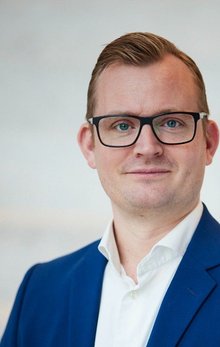
Simon Boas Hoffmeyer
VP, Global Head of Sustainability and ESG