Can McDonald's Ever Be Truly Sustainable?
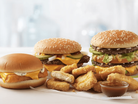
The advent of fast food changed culinary culture forever. However, chains like McDonald’s, Burger King and KFC have rarely been associated with sustainability.
Their high-volume, quick service business models—which have locations in almost every country around the world— require vast amounts of resources, giant supply chains and eyewatering energy bills.
In the past, fast food chains have caused controversy with their approach to farming, animal treatment and waste policies, but it’s also true that these chains are trying to become more responsible and sustainable.
In line with this, McDonald's has started to accelerate its sustainability efforts across its global operations in recent years.
The company is reconsidering everything from its packaging designs to its restaurant construction practices.
Supply chain transformation
Animal welfare has become a focal point for McDonald's sustainability strategy.
The company achieved its goal of sourcing 100% cage-free eggs in the US market by the end of 2023, two years ahead of schedule.
This accomplishment reflects changing consumer expectations around ethical sourcing.

"We believe that serving safe, quality food requires sourcing animals that are properly cared for throughout their lives," McDonald's explains regarding the cage-free transition.
However, critics note that cage-free does not necessarily mean cruelty-free, and questions remain about other aspects of McDonald's massive supply chain.
Reimagining physical spaces
In France, McDonald's has pioneered what it calls a "circular restaurant design."
This approach focuses on reusing, repurposing and recycling construction materials to reduce waste and carbon emissions.
The concept represents a potentially significant shift in how fast food restaurants approach their physical footprint.
By salvaging decor, furniture and materials from other locations, McDonald's France is attempting to "close the loop" on construction waste.
The environmental impact of such initiatives, however, must be weighed against the company's continued expansion of thousands of restaurants worldwide.
Environmental action
Beyond global policy changes, McDonald's has implemented community-based environmental programs in several markets.
In the UK and Norway, local teams have organised "litter patrols" and clean-up events in partnership with environmental organisations.
These initiatives include daily trash collection around restaurant perimeters and public awareness campaigns.
The company's US restaurants also introduced new crew uniforms made with recycled polyester from plastic bottles last year.
"These uniforms are made in collaboration with designers who understand the importance of durability, comfort and a little flair," McDonald's says.
In 2024, the company rolled out new lid-free McFlurry cups across the US market, aiming to significantly reduce plastic waste.
"McDonald's is committed to making 100% of its primary guest packaging come from renewable, recycled or certified sources by the end of 2025," the company says.
The timeline gives McDonald's less than a year to fulfill this ambitious pledge.
The sustainability paradox
Despite these varied initiatives, McDonald's faces what might be called the fast food sustainability paradox.
The fundamental business model—serving millions of quickly-prepared, low-cost meals daily—inherently generates substantial environmental impacts.
From agricultural production to packaging and energy consumption, the scale of McDonald's operation presents intrinsic sustainability challenges.
“No matter how hard some companies try, the core product or service they offer could never be part of a sustainable society. McDonald's provides a case in point,” says Paul Abela, Writer for Climate Conscious.
That being said, the company is certainly trying.
“We’ve not cracked it yet,” says Beth Hart, Chief Sustainability Officer of McDonald’s, on the chain’s relationship with regenerative agriculture and sustainability.
“We've got to distil it down to some very practical measures,” she says. “And I think it's going to take all of us to do that effectively.”
Explore the latest edition of Sustainability Magazine and be part of the conversation at our global conference series, Sustainability LIVE.
Discover all our upcoming events and secure your tickets today.
Sustainability Magazine is a BizClik brand