CIMB & Wild Asia Partner For Sustainable Palm Oil
Palm oil has been linked to deforestation, biodiversity loss and social conflicts. More than 90% of palm oil comes from Malaysia and Indonesia.
To tackle the negative impact this oil has, CIMB Bank Berhad is entering a new partnership with Wild Asia Sdn Bhd to support sustainability in the palm oil sector.
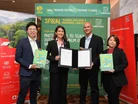
A Memorandum of Understanding (MoU) signed between the two is aiming to improve transparency and promote responsible sourcing throughout the supply chain.
Through the Small Producer Inclusivity & Resilience Alliance Programme (SPIRAL), the collaboration supports smallholders and independent producers in gaining certification and improving practices to meet environmental standards.
Supporting small producers
SPIRAL focuses on strengthening inclusivity within the palm oil value chain, targeting the core of the industry – smallholders, small growers and estates.
Through certification support and improved access to market opportunities, producers will be better equipped to adopt sustainable practices.
CIMB and Wild Asia’s programme encourages regenerative agriculture –restoring soil health and biodiversity, while reducing dependency on synthetic additives.
Producers are also being guided to measure and manage their GHG emissions, aiming to reduce carbon intensity of operations.
These actions aim to help producers adopt lower-emission practices while maintaining stable productivity.
"We are pleased to partner with Wild Asia to drive meaningful change in the palm oil industry from the ground up,” comments Luanne Sieh, Group Chief Sustainability Officer at CIMB Group.
“Sustainability in this sector goes beyond reducing environmental impact – it is also about strengthening livelihoods and creating long-term economic opportunities throughout the value chain, especially for smallholders who form a large part of the ecosystem.
“Through close collaboration with Wild Asia, our clients and industry stakeholders, we are committed to shaping a more responsible and inclusive palm oil ecosystem."
By enabling credible certification for mills and supply chains, the initiative promotes responsible sourcing at scale.
Finance for sustainable growth
As part of the MoU, CIMB and Wild Asia are set to explore tailored services for CIMB’s palm oil customers.
- Developing financial solutions that align with sustainability goals.
- Helping clients transition to practices that meet tightening environmental regulations.
- Supporting clients to meet the changing market demands.
The focus on sustainable finance solutions reflects on a broader trend in the financial sector – where institutions are looking to embed environmental, social and governance criteria into lending and investments.
The collaboration aims to provide palm oil producers with the support needed to build long-term resilience in the face of environmental shifts.
"Our on-ground initiatives have delivered tangible results, proving that inclusive palm oil production is achievable,” explains Dr Reza Azmi, Founder and Executive Director of Wild Asia.
“We’ve also demonstrated that by adopting regenerative practices, oil palm can serve as a long‐term carbon sink.
“With SPIRAL Partners leading the charge, we are poised to scale these efforts across the industry—paving the way for thriving communities, prosperous businesses, and a healthier planet."
Reaching net zero
The partnership is part of CIMB’s wider commitment to reaching net zero by 2050.
By 2030, the bank is aiming to reduce emission intensity in its palm oil portfolio by 16% – from 1.81 in 2022 to 1.52 tCO₂e/tCPO.
These goals are set using guidance from the Science-Based Targets Initiative and its Forest, Land and Agriculture sector framework.
By encouraging decarbonisation across its client base, CIMB seeks to support a broader shift to low-carbon operations while ensuring that the transition remains fair and inclusive.
"This partnership is an example of how collaboration across the value chain can drive meaningful change,” explains Luanne.

“As we work with our clients to support real economy decarbonisation, CIMB remains committed to ensuring a just transition to a low-carbon future."
CIMB’s work in sustainable finance has also gained global recognition.
The bank is ranked first among financial institutions on the Financial System Benchmark by the World Benchmarking Alliance.
Covering 400 institutions, the benchmark evaluates alignment with international goals including the Paris Agreement and UN Sustainable Development Goals. CIMB moved up three places from its 2022 position in the benchmark’s latest assessment.
By combining sustainability-focused finance with support for regenerative agriculture, the partnership between CIMB and Wild Asia is set to improve practices across the palm oil industry.
Explore the latest edition of Sustainability Magazine and be part of the conversation at our global conference series, Sustainability LIVE.
Discover all our upcoming events and secure your tickets today.
Sustainability Magazine is a BizClik brand