
How Might Starline Impact Europe's Transport Emissions?
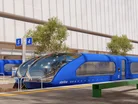
Europe is on the cusp of transforming its transportation landscape with a newly proposed high-speed rail network named 'Starline'.
The Starline plans consist of five new ultra-long distance train lines stretching across the continent, linking cities as far flung as Paris and Istanbul, or Lisbon and Kyiv.
This ambitious plan not only promises faster and more seamless cross-border travel for passengers but also aims to revolutionise freight logistics and trade across the bloc.
These investments in European rail travel could have hugely positive impacts on the continent's sustainability, with trains representing a far greener alternative to both automobiles and planes.

Inside Starline
Starline is set to be a state-of-the-art high-speed rail network, designed to transport passengers and freight across the continent quicker than ever before.
Though it is still in its early planning stages, it is believed that Starline could significantly reduce Europe's reliance on road freight and short-haul flights, strengthening Europe's economic connections while also slashing transport-related emissions.
Rail freight is four times more energy-efficient than road transport, yet only 18% of goods in Europe are currently delivered by train.
This is mostly down to the fragmented rail infrastructure, border delays and the absence of high-speed freight options, all of which make rail less appealing to logistics companies.
Right now, there are several high-speed rail connections across Europe, but the vast majority of these are dedicated to passenger travel.
However, by integrating freight into high-speed passenger travel, it is thought that Starline could provide a genuine, desirable alternative to air and road travel for logistics companies.
This could enable essential goods like medical supplies, fresh production and critical manufacturing components to travel at speeds of 300–400 km/h.
Supply chains sans frontières
One of the main challenges in European freight is the lack of seamless cross-border transport.
Although the Schengen Agreement removes the need for passport control, rail infrastructure is still disjointed, with each country operating under different technical standards and regulations.
It's inefficient, which makes international freight transport far slower and more costly than it needs to be.
Part of the Starline vision is the development of a rail system akin to a metro network, facilitating unhindered movement for both passengers and cargo across Europe.
The plan includes real-time freight tracking, which is already a standard feature of modern air freight. Then, there's the proposition of automated scheduling and dynamic routing, which would allow trains to adapt to demand, eliminating bottlenecks and delays.
By enhancing connectivity between cities and logistics hubs, Starline could hugely strengthen the resilience of Europe's supply chains.
This improvement would enable factories to receive raw materials more quickly, retailers to replenish shelves efficiently and local producers to access new markets without depending on long-haul road transport.
“A Europe that moves better is a Europe that trades better,” the proposal advocates, emphasising the transformative potential of stations as gateways for commerce, creativity, and connection.
A new era for rail travel
One of Starline's most innovative concepts is transforming train stations into fulfilment hubs.
These hubs would handle both passenger and freight operations, facilitating rapid transfers between rail, road and air transport.
The hope is that this colocation of freight and passenger terminals could eliminate inefficiencies in international trade, saving energy, time and money, especially when compared to high polluting short-haul cargo flights.
“A bold shift to high-speed rail might be Europe’s best chance to meet its 2050 net-zero goals while ensuring mobility remains both fast and green," says 21st Europe, the creative agency behind these initial Starline plans.
Founder of 21st Europe, Kaave Pour, believes that Starline's blueprint is a "rethink of how design, technology, and culture can create infrastructure that is seamless, sustainable and exciting".
"Imagine blue high-speed trains gliding effortlessly across borders, transforming a patchwork of national lines into a single, unified experience," he says.
Explore the latest edition of Sustainability Magazine and be part of the conversation at our global conference series, Sustainability LIVE.
Discover all our upcoming events and secure your tickets today.
Sustainability Magazine is a BizClik brand