What Next as Baltic States Switch off Russian Energy Supply?
The Baltic states of Estonia, Latvia and Lithuania have achieved a significant milestone in enhancing Europe's energy security by synchronising their electricity grids with the Continental Europe Synchronous Area (CESA).
This is a significant moment in the geopolitical history of the Baltics, as it permanently detaches the three nations from Russian and Belarusian power systems.
It's a big moment across the continent too, one that is likely to send shockwaves through Europe's energy landscape as yet more countries take shake their reliance on Moscow.
For the Baltics, this moment comes after years of planning, infrastructure enhancements across the region and substantial technical backing from the European Union, ENTSO-E and neighbouring countries, like Poland.
The successful synchronisation provides the Baltic nations with the capability to independently govern their electricity grids in collaboration with other European partners, thereby assuring enhanced stability and control.
Years of preparation and European cooperation
European Commissioner for Energy and Housing, Dan Jørgensen, expressed his satisfaction with how swiftly the project was accomplished.
"It is great to see that Lithuania, Latvia and Estonia are now fully independent and disconnected from the grids of Russia and Belarus," he said.
"The full integration of the Baltics in the EU internal energy market and the synchronisation of their electricity networks with Continental Europe – ahead of schedule – is a landmark event for the entire EU."

He highlighted the significant achievement of integrating these states into the EU internal energy market and the synchronisation of their electricity networks with Continental Europe—which was completed 'ahead of schedule.'
The anticipation and implementation of this project spanned several years, originally projected to wrap up by 2026. It necessitated meticulous planning and coordination among Baltic transmission system operators—Estonia's Elering, Latvia's AST, and Lithuania's Litgrid—and essential partners across Europe.
Poland's PSE played a pivotal role by serving as the direct physical linkage integrating the Baltic systems with the broader European grid. Furthermore, the European Union invested over US$1.24bn through the Connecting Europe Facility to ensure seamless synchronisation.
Vital technical guidance and extensive collaboration from ENTSO-E were crucial in facilitating this smooth transition.
Today, history is made. This is freedom; freedom from threats; freedom from blackmail.
A shift away from Russian influence
Previously, the Baltic states had depended on Russia and Belarus for frequency control, exposing them to potential disruptions or political leverage.
The recent synchronisation not only severs the last energy link between the Baltic region and Russia but also significantly diminishes Moscow’s capacity to influence these nations.
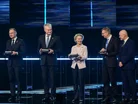
During the ceremony marking this historic achievement, European Commission President Ursula von der Leyen expressed, "Today, history is made. This is freedom; freedom from threats; freedom from blackmail."
These words resonate deeply, reflecting the geopolitical and strategic importance of the Baltic states' energy independence.
Lithuania’s Energy Minister, Zygimantas Vaiciunas, affirmed the significance of this development, stating, "The Baltic energy system is finally in our hands, we are in full control."
Strengthening Europe’s energy security
The integration into the CESA not only bolsters the energy security of the Baltic states but also enhances the robustness of the entire European energy network. ENTSO-E President, Zbyněk Boldiš, acknowledged the critical nature of this integration.
"The synchronisation of the Baltic states with the Continental Europe Synchronous Area is an important step towards strengthening the energy independence and security of Estonia, Latvia, and Lithuania," he noted, further commending the European solidarity and cooperation that made this possible.
By connecting to the European grid, over 400 million customers are served, reducing reliance on external power sources. This initiative aligns with the EU's broader strategy to foster a sustainable, resilient, and interconnected energy market capable of adapting to various challenges and external pressures.
The success of the Baltic synchronisation may very well serve as a model for other countries aiming to achieve greater energy autonomy from Russian influence.
This landmark event symbolises Europe's commitment to a secure, independent, and sustainable energy future, celebrating the collective effort and investment that reshapes the continent's energy infrastructure.
"The Baltic energy system is finally in our hands, we are in full control," stated Zygimantas Vaiciunas, emphasising the newfound autonomy and control over their energy destiny, marking a new chapter for the Baltic states in the European energy narrative.
Ukraine’s Prime Minister Volodymyr Zelenskyy also gave his words of support and goodwill for Latvia, Lithuania and Estonia during a virtual briefing.
“Moscow will no longer be able to use energy as a weapon against the Baltic states,” he said.
Explore the latest edition of Sustainability Magazine and be part of the conversation at our global conference series, Sustainability LIVE .
Discover all our upcoming events and secure your tickets today.
Sustainability Magazine is a BizClik brand