
How China is Investing in Global Agricultural Development
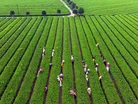
China has renewed its US$10m contribution to the China-IFAD South-South and Triangular Cooperation (SSTC) Facility, reinforcing a partnership that has already benefited over 100,000 people in rural areas worldwide.
The agreement was signed on 13 February 2025 at the International Fund for Agricultural Development's 48th Governing Council meeting in Rome by IFAD President Alvaro Lario and Liao Min, Vice Minister of Finance of the People's Republic of China.
The facility was first set up in 2018 with an initial US$10m contribution from China.
Its purpose? To provide a distinctive approach to sustainable agricultural development.
Rather than traditional aid models, it focuses on facilitating knowledge-sharing and collaboration between developing nations, leveraging expertise from countries that have successfully addressed similar challenges.
"IFAD has a unique advantage in using SSTC to support global rural economic development,” says Liao Min, Vice Minister of Finance of the People's Republic of China.
“China, as the largest developing country, is willing to share more experience with other fellow developing countries."
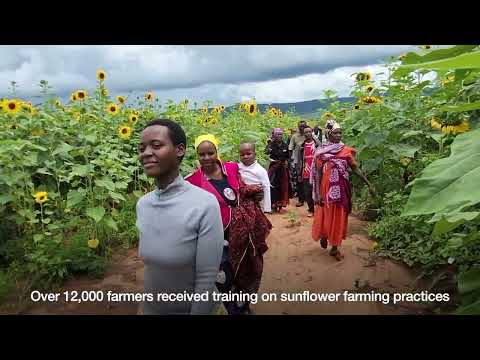
By the end of 2024, the facility had supported 20 SSTC projects across 40 countries spanning Africa, Asia and the Pacific and Latin America and the Caribbean.
These initiatives have directly benefited over 50,000 people, with indirect benefits reaching twice that number.
"China's experience in lifting millions out of poverty offers valuable lessons for the world, and this generous contribution demonstrates its commitment to sharing that expertise with other nations," Alvaro explained during the signing ceremony.
What distinguishes this approach is its emphasis on sustainable knowledge transfer rather than temporary financial support.
The facility enables developing countries to share agricultural innovations, climate-resilient farming techniques and market development strategies that have proven successful in similar socioeconomic contexts.
How China and IFAD are aligning with the UN's SDGs
The renewed funding comes at a critical juncture for global sustainability efforts. With the 2030 deadline for achieving the UN Sustainable Development Goals rapidly approaching, the facility's work directly contributes to SDG 1 (No Poverty) and SDG 2 (Zero Hunger), whilst indirectly supporting several others including SDG 13 (Climate Action).
Phase II of the facility will continue to advance SSTC efforts by promoting the exchange of knowledge, technology and resources among developing countries with three clear objectives: strengthening productive capacities, fostering inclusive business models and supporting investment linkages between developing nations.
"This support will enable us to further accelerate progress in rural poverty reduction and empower small-scale farmers by sharing knowledge, resources and best practices through our South-South and Triangular Cooperation facility,” Alvaro said.
“It's a significant vote of confidence in IFAD's mission and strengthens our partnership."

Using a demand-driven approach
What makes the China-IFAD facility particularly effective is its demand-driven methodology.
Projects are developed, owned and executed by recipient organisations, including government agencies, international organisations, NGOs and private sector entities, whilst following IFAD's policies and guidelines.
This approach ensures that initiatives align with national priorities as outlined in Country Strategic Opportunities Programmes (COSOPs), maximising developmental impact whilst addressing local needs and circumstances.
The facility's projects cover a broad range of sustainability themes including climate change adaptation, gender equality, nutrition and youth engagement.
Target beneficiaries include smallholder farmers, farmers' organisations and small agribusinesses—groups that are often most vulnerable to climate change impacts and market volatility.
Building resilient food systems
As global food systems face unprecedented challenges from climate change, biodiversity loss and market disruptions, the facility's work in promoting sustainable agricultural practices has become increasingly relevant.
By facilitating the transfer of climate-resilient farming techniques and inclusive business models, the China-IFAD partnership contributes to building more sustainable and equitable food systems across the Global South.
The renewed funding represents not only a financial commitment but also a recognition of the effectiveness of South-South cooperation as a mechanism for sustainable development.
As the world grapples with interconnected challenges of poverty, hunger and climate change, such partnerships demonstrate how knowledge-sharing between nations can accelerate progress towards a more sustainable future.
“IFAD’s partnership with China is a cornerstone of our work in Asia and indeed around the world,” said Lario.
“We look forward to continuing our support for China’s agenda of rural revitalisation, and working globally to share our knowledge, resources, and expertise on rural poverty alleviation and empower small-scale farmers through the China-IFAD South-South and Triangular Cooperation facility.”
Explore the latest edition of Sustainability Magazine and be part of the conversation at our global conference series, Sustainability LIVE .
Discover all our upcoming events and secure your tickets today.
Sustainability Magazine is a BizClik brand