How Formula 1’s European Races will be Powered Sustainably
Aggreko has been named the Official Temporary Power Solutions Provider for European Formula 1 races in a seven year partnership.
Its solutions were used for three races in the 2024 season, including at the Austrian Grand Prix, where associated carbon emissions were reduced by more than 90% compared to 2022.
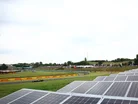
Solar PV hybrid systems using battery energy storage systems (BESS) and Stage V generators fuelled by hydrotreated vegetable oil (HVO) will be used across facilities at Grands Prix.
Aggreko’s low-carbon power solutions support not just the paddock, but also F1’s International Broadcast Compound in efforts to bring the sport to net zero by 2030.
Ellen Jones, Head of ESG at Formula 1, said: “The delivery of our Net Zero by 2030 commitment is driven by new technologies and new ways of working.
“With Aggreko's support, Formula 1 is taking another step to reduce emissions across the Paddock.
“The low carbon power solutions will be in action across our European events this year and will further support our drive to be Net Zero by 2030."
Aggreko’s sustainable power solutions
Aggreko has made a multimillion-pound investment in its equipment and services to provide more sustainable power options.
This includes a new fleet of Stage V generators, with models ranging from 30 kVA to 1200 kVA, and hybrid batteries.
Along with these, it offers HVO as a drop-in fuel that can cut CO₂ emissions by up to 90% and particulate matter by up to 42%.

It has also expanded its chiller fleet with a very low temperature chiller (VLTC) that runs on CO₂ as an ultra-low GWP refrigerant.
Robert Wells, Europe President and Head of Events at Aggreko, said: “Our partnership with Formula 1 is built on the strength of our shared vision and values.
“By improving performance in innovation, sustainability and technology through our work powering some of the sport’s supporting infrastructure, we are showcasing how bespoke solutions using our latest Greener Upgrades technologies can help meet ESG goals in a setting that is the ultimate test of performance.
“We’re proud to collaborate with Formula 1 on its global stage, setting a shining example of how large event operators can accelerate change by learning from this progressive approach in reducing emissions.”
Formula 1’s partnership with Aggreko
F1’s partnership with Aggreko is the continuation of a successful collaboration that began with a pilot project at the 2023 Austrian Grand Prix.
Encouraged by its success, the system was further tested at the Red Bull Ring and the 2024 Hungarian Grand Prix.
Consistent reductions in carbon emissions at these events solidified plans to implement this centralised power system across all European Grands Prix from 2025.
This system will eliminate the need for individual teams and stakeholders to bring their own generators, providing sufficient power for all operational areas throughout the race weekend.
Aggreko’s role in F1’s sustainability efforts mirrors its work with Formula E, where it is focused on reducing emissions by 45% across Scopes 1, 2 and 3 by 2030.
Formula 1's green initiatives
F1 has pledged to achieve net zero by 2030, focusing on reducing emissions from travel, logistics and energy use.
Transitioning to renewable energy sources at race events is a key part of this strategy, with more than 75% of promoters now using green power.
Sustainable fuels are also playing a big role – F1 is working towards having all cars on the grid powered by 100% sustainable fuel by 2026.

The pioneering ‘drop-in’ fuel will be able to be used by most road cars across the world.
It’s also improving its logistics – using biofuel-powered trucks and increasing reliance on sea freight instead of aviation has already significantly reduced carbon emissions.
It is hoped that these developments won't just benefit F1, but can be used across the world for cars, logistics and large events.
Explore the latest edition of Sustainability Magazine and be part of the conversation at our global conference series, Sustainability LIVE.
Discover all our upcoming events and secure your tickets today.
Sustainability Magazine is a BizClik brand