Knight Frank: How ESG Could Change Historic Buildings
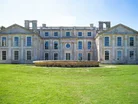
Stricter ESG regulations are causing problems for listed buildings in Central London.
Poor insulation and outdated heating systems that don’t meet modern standards can result in high energy consumption and increased operational costs according to Knight Frank.
Listed buildings are of historic significance and protected by law, requiring listed building consent before undertaking any works that could alter their significance.
These challenges have left commercial tenants shifting away from living in these buildings as they prioritise properties that meet higher ESG demands.
Jonathan Hale, Head of ESG Consulting at Knight Frank, explained in an article: “The focus on ESG in real estate will not only require technical advancements and new standards, but also a return to the core principles that drive meaningful change.
“From improving reporting consistency to emphasising accurate data and prioritising embodied carbon, the basics will provide the foundation for progress.
“As the sector continues to grow, the integration of nature, the embrace of a just transition and the continued refinement of ESG metrics will shape the future of real estate investment and development.”
A transition to residential spaces
Knight Frank explains that residential buyers often value the unique historical charm of listed buildings, whilst commercial tenants can be deterred by their limitations.
With this commercial viability decreasing, converting listed buildings into residential spaces is a logical solution.
The company also says that residential use offers more opportunities to address energy efficiency challenges without compromising the buildings’ integrity.
What’s more, many listed buildings were originally built as homes, so this shift would return them to their original function.
Increasing conversions
The UK Government removed a 1,500 square metre cap on commercial-to-residential conversions in March 2024, accelerating this shift in the property market.
Knight Frank’s 2024 London New Homes Report found that applications for office-to-residential conversions surged to 3,272 between mid-March and mid-November which is an increase of nearly 60% compared to pre-pandemic levels.
These large-scale conversions are spreading across 12 of London’s 32 boroughs.
The Old War Office in Whitehall, for example, has been converted into luxury residences and a hotel.
One Bessborough Gardens is undergoing a similar transformation into 53 homes by Firethorn Trust.
This 70,000 square foot building overlooks the Thames and was once an MI5 spy school.
Marcus Weeks, Director and Head of Living at Firethorn Trust, commented: “One Bessborough Gardens presented a strategic opportunity for us to create a unique residential offering at a time of limited supply to the market and increased demand.
“This is a fantastic addition to our growing Living portfolio, at a scale and quality that not only reflects our ambition to become leaders in the Living markets, but represents our genuine passion for creating modern spaces that have a positive impact on people and places.”
Knight Frank says this trend isn’t confined to Grade II listed buildings – religious, educational and charitable institutions are also offloading properties they can no longer afford to maintain.
Explore the latest edition of Sustainability Magazine and be part of the conversation at our global conference series, Sustainability LIVE.
Discover all our upcoming events and secure your tickets today.
Sustainability Magazine is a BizClik brand