Q&A: British Airways’ Tom Byrne on Decarbonising Aviation
Aviation is a fascinating sector, especially when it comes to sustainability.
It is known as a ‘hard-to-abate sector’ because, unlike other industries, its road to net zero is not so straightforward.
Scope 3 emissions (indirect emissions from up and down a company’s supply chain) form the majority of total emissions for most organisations around the world.
In aviation, almost all emissions come from Scope 1 (the direct emissions from operations). The reason? Jet fuel.
Planes rely on jet fuel to fulfil their primary function, but sustainable alternatives are not yet readily available enough for the sector to totally switch out fossil fuels for cleaner, greener ones.
Instead, aviation companies like British Airways have to decarbonise in other ways.
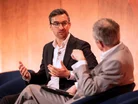
After his fascinating fireside at Sustainability LIVE: Net Zero, Tom Byrne, British Airways' Head of Net Zero & Environment, told us all about the innovative approaches that the industry is taking to decarbonisation right now.

Could you tell us a little bit about your role at British Airways and how you first got into sustainability?
My job is Head of Net Zero & Environment and it's a privilege to have that for a brand like British Airways.
I've always loved flying and being able to contribute towards flying getting more sustainable in time is a dream for me.
My team focuses on accelerating our net zero programme, which is about using less fuel, lower carbon fuels and increasingly looking at carbon removals, but also looking after our wider environmental footprint.
So that's food waste, single-use plastic and environmental compliance. It's a really busy area and a really brilliant job.
I've been in the industry for over a decade now and I’ve primarily worked for big corporates in the built environment, online fashion and now aviation.
My work is about really trying to help businesses achieve their long-term carbon goals and climate goals. And yeah, it's been a good ride!
There are many different parts to net zero at a company like BA. The biggest part in aviation is fuel – can you talk about fuel efficiency and sustainable aviation fuel (SAF)?
You’re right – the majority of our emissions are in our Scope 1 and the majority of those is burning jet fuel. So that's the primary source of our emissions and it’s what we look at every single day to drive down.
There's three main ways of tackling that.
1. Using less fuel and having more operational efficiency. So our new aircraft, the Airbus A350 uses 35% less fuel than the Boeing 747 that it’s replacing.
The Airbus A320 Neos use about 20% less fuel than the ones they're replacing. So, working with companies like Airbus and Boeing to improve fuel efficiency is really key.
2. Working with our pilots to improve efficiency. So we operate every single day with more efficient processes and more efficient technology. So that's a really key part of our net zero pathway. We think that will cover about a third of our emission reductions.
3. SAF. If we’re using fuel, are we using lower carbon fuel? That's where SAF really comes into it.
There have been a few stories about contrails in the news recently. Does BA do much work around contrails?
Carbon is part of the equation when it comes to climate, but there's this other element of our climate impact, which is called non-CO₂, and contrails form a large part of that.
Non-CO₂ is something that we are thinking about a lot and have been for the last couple of years.
We're trying to work with the science community, with the academia community just to improve the science and knowledge, because with carbon we really know one tonne of jet fuel that we burn equals three tonnes of CO₂ into the atmosphere.
We know what that does to climate change and global warming.
With non-CO₂ – including contrails, the level of uncertainty is much wider. We're working with the likes of Imperial College London, Bill Gates’ Breakthrough Energy and the UK government to actually improve the science.
We're actually doing a research study ourselves around how we could use SAF to reduce contrails as well.
We're trying to collaborate as best we can with industry partners to improve their knowledge, improve the science, and then hopefully mitigate in the future like we're doing with CO₂ emissions.
Aviation is often called a ‘hard-to-abate’ sector, so if there's people actually ready to team up and join forces on how to decarbonise, then that's a great thing.
Exactly right. There's three elements of collaboration that I think about a lot. Firstly, collaborating with your peers.
So what are you doing to share information, best practise data with your peers? And as an industry, we all need to move towards that net zero position.
It's no good to us if only BA does it, right? So we have to collaborate with our sister airlines and our peers.
Then, it's collaboration with the supply chain. That’s really important because we don't produce planes, we don't produce fuel, we don't capture carbon emissions ourselves. We have to work with supply chain partners to do that.
And then thirdly – customer collaboration. So that might just be communicating to customers, but we can give them more information about the issues around aviation and what we're trying to do to solve those issues.
We're also collaborating with corporate customers. We know we are a lot of our corporate customers’ Scope 3 footprint.
Tackling Scope 3 is really important for them and we can work with them on those solutions.
Whether that is just giving them information, data, helping them to make smarter choices, co-sponsoring things like SAF to drive down their emissions as well, that's really vital.
Collaboration exists in lots of different ways and without it we won't get very far.
Explore the latest edition of Sustainability Magazine and be part of the conversation at our global conference series, Sustainability LIVE.
Discover all our upcoming events and secure your tickets today.
Sustainability Magazine is a BizClik brand