The Sustainability Headlines from Heineken’s Annual Report
Dutch brewing giant Heineken is the latest major corporation to release its annual report for 2024, which reflects on the company’s performance across all key areas.
Predictably, after a year of investment and progress, sustainability is heavily featured in the report.
It contextualises Heineken’s commitment to sustainability, detailing the significant progress the team has made on emissions reductions, circular packaging, water conservation and responsible drinking campaigns.
While financial results reflected steady organic growth, the report’s sustainability highlights paint a picture of a company increasingly embedding environmental and social responsibility into its everyday operations.

A step closer to net zero
First up, net zero.
In 2024, Heineken continued its drive towards net zero carbon emissions across its value chain by 2040, with major reductions achieved in 2024.
Since 2022, the company has cut Scope 1 and 2 emissions by 34%, a marked improvement from the 19% reported in 2023.
Scope 3 emissions, which cover the broader supply chain, also saw a 14% decrease, with significant reductions in emissions linked to agriculture and land use.
None of this is possible without exceptional supply chain management and collaboration.
"Our partners bring invaluable expertise, cutting-edge technological solutions, and fresh perspectives to the challenges we face,” says Magne Setnes, Chief Supply Chain Officer at Heineken.
“These skills are crucial in helping Heineken Global achieve its ambitious goal of net zero in Scope 1 and 2 by 2030 – a feat that demands collective effort and expertise."
Renewable energy use surged, with 84% of the company’s electricity now sourced from renewables.
The use of renewable thermal energy also increased to 35%, bringing the total share of renewable energy across production to 50%.
This transition is a cornerstone of Heineken’s sustainability strategy, with the company leveraging a financial model that balances costs with carbon impact.
An investment in circular packaging
The brewer launched a new circularity strategy in 2024, focusing on packaging sustainability.
By the end of the year, 39% of Heineken’s volume was sold in reusable packaging, and recycled content in bottles and cans rose to 44%.
The company also ensured that 98% of its packaging was recyclable by design.
These milestones represent Heineken’s broader efforts to integrate sustainability across the supply chain.
As packaging remains a critical sustainability challenge in the beverage industry, these figures indicate tangible progress towards reducing waste and reliance on virgin materials.

Tackling water scarcity
Water conservation remains a key pillar of Heineken’s sustainability agenda. In 2024, the company ramped up investment in active water replenishment initiatives, increasing the number of projects to 36, compared to 28 the previous year.
Large-scale reforestation projects in Brazil, Ethiopia and Malaysia contributed to this effort, helping improve water retention in key regions.
Despite a rise in the number of water-stressed sites from 32 in 2023 to 41 in 2024, Heineken maintained its efficiency, with average water usage improving to 3.1 hectolitres per hectolitre of beer produced, down from 3.2 hl/hl in the previous year.
This focus on water stewardship is critical as the company operates in markets where water scarcity is an increasing concern.
Sonia Thimmiah, Senior Director of Global Sustainability at Heineken, understands that a nuanced approach from country to country is important in water conservation.
“Water is a very location-specific issue in terms of the solutions you need to bring,” she says.
“It’s not like carbon; what works in Mexico is very different to what you need in Indonesia.”
Heineken’s approach to social impact and inclusion
Beyond environmental initiatives, Heineken maintained its commitment to social sustainability.
The company achieved its target of having 30% women in senior management roles a year ahead of schedule and continues working towards 40% by 2030.
Heineken also reinforced fair wage commitments, with 99.7% of employees earning a fair wage per the Fair Wage Network benchmark.
The remaining 0.3% of employees, based in Singapore, are on a government-mandated progressive wage model and are expected to align fully in the near future.
Advocating for responsible consumption
As part of its responsible drinking initiatives, Heineken ensured that a zero-alcohol option was available for at least one strategic brand in 91% of its markets, surpassing its 90% target.
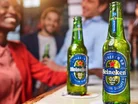
The Dutch brewer continued to expand its production of Heineken 0.0, which is now available in a total of 117 markets worldwide.
The company also stepped up efforts to promote moderation, with 15% of Heineken media spend allocated to responsible drinking campaigns, exceeding the original goal of 10%.
This push for responsible consumption aligns with industry-wide efforts to mitigate alcohol-related harm and reinforce consumer choice.
What next for Heineken?
As Heineken prepares for 2025, it remains focused on sustainability as a core business priority.
The company has fully integrated sustainability metrics into its reporting under the new Corporate Sustainability Reporting Directive (CSRD) and European Sustainability Reporting Standards (ESRS), which will enhance transparency and accountability.
Despite ongoing economic volatility and challenges in emerging markets, Heineken’s sustainability performance in 2024 suggests that the company is making measurable progress towards its long-term goals.
By embedding circularity, decarbonisation, and social responsibility into its operations, the brewer is positioning itself as a leader in sustainable business practices within the global beverage industry.
Explore the latest edition of Sustainability Magazine and be part of the conversation at our global conference series, Sustainability LIVE .Discover all our upcoming events and secure your tickets today.
Sustainability Magazine is a BizClik brand