
Tom Brady: From Super Bowl to Sustainable Boat Racing Champ
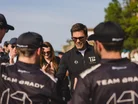
Tom Brady’s name is so synonymous with winning that he could loan it out to give others his sporting stardust.
The NFL quarterback, best known for two decades with the New England Patriots, won seven Super Bowls and five Super Bowl MVP awards in a stellar career.
Post-retirement he became the owner of Team Brady powerboat team in the E1 Series – going up against other owners who are used to winning, including tennis star Rafael Nadal, cricketer Virat Kohli and acting legend Will Smith.
And guess what? Yes, Team Brady won the inaugural championship.
But in E1, winning on the water is only one measure of success. The E1 Series was established to drive sustainability in the boating world, with each team held to account for its carbon emissions.
At Team Brady, much of the responsibility for winning on and off the water is with Co-Team Principals Joe Sturdy and Ben King. They spoke to Sustainability Magazine about working for a global legend and pioneering clean, green boat racing.
How long have you known each other?
Ben: We met at university studying motorsport engineering. I quite quickly realised I wasn't an engineer – or wasn't passionate enough to be a very good engineer – so decided that I had more of an interest in the business and commercial side of motorsport and went down that route. I also had some time in automotive and a bit of time in the EV startup space as well.
Joe stayed on the motor sport engineering route and had a great career in Formula One and won a few championships with Max Verstappen and Red Bull.
We run Team Brady together. We have our areas of expertise: myself a little bit more on the commercial and strategy side and Joe more on the performance side. But we do very much overlap.
It's a pleasure to work so closely with someone who is also a very close friend.
Joe: We work together really well and our skills complement each other. And it's something that we've learned from Tom that teamwork is super important.
How did you come to be leading Team Brady?
Ben: I used to work at McLaren Automotive and with the work that I was doing there I met Rodi Basso, who at the time was heading up the Motorsports Division. Rodi is now the CEO of E1. We would catch up periodically and, during one of those meetings, he said: ‘What are you guys doing in terms of electrification?’ And then he went into this grand vision for an electric power boat racing championship.
I didn't really think much of it at the time. Fast forward a couple of years and Rodi had left McLaren and launched E1 with Alejandro Agag.
I reached out to Rodi, we had a meeting and it coincided with a very good time for Joe and myself, because we were talking for a while about doing something together. We had all sorts of ideas – one of which was a team in electric motorsport.
Did you find Team Brady or did Tom Brady find you?
Joe: We didn't have the means to run a team on our own and Tom didn't have a management team in place for the day-to-day for Team Brady. We were coming at the series from different angles. We collided, met in the middle and Team Brady was formed.
Ben and I were handed the boat keys on day zero, so we started from scratch. We had a team name and a team owner, but that was it.
I guess Tom valued our backgrounds. We'd both worked at the highest levels in motorsport and we shared the vision that Tom has for positive change through sport.
How hands-on is the boss?
Joe: We speak with him and his team on a weekly basis, and he has a lot of trust in Ben and I to make key decisions. He is involved in all aspects of the team. If he's not making decisions himself, he's certainly giving us really valuable feedback on all aspects – whether it's the hiring of a junior mechanic, things to look for and values that he would want to bring into the team.
But equally it could be a huge partnership deal that we're working on and he would get involved and likes to know all of the details. But at the same time we have autonomy to run the team as we see fit.
How would you measure success? What are the other ways that you would consider yourself to be progressing?
Ben: The most obvious is performance and winning races, then there is the commercial aspect. We need to make this commercially successful and we're working on building out portfolio partnerships.
But, when you consider the reasons why Tom got involved and Joe and I got into this, plus the very reason that E1 exists, it’s the sustainability mission. Really, it's performance, commercial and sustainability, all kind of wrapping into one.
What makes the boats and the events sustainable?
Ben: The series is championing a vision for sustainable marine transportation. That may sound a little bit wishy-washy from the outside. But, having had experience with Formula E, I’ve seen how that helps to shape the automotive industry.
It's something that can have a huge impact – especially with E1 having huge celebrity team owners. If anything, it could have a bigger impact on the marine industry than Formula E did on automotive.
I think it's fair to say that the marine industry is lagging behind automotive in its transition towards net zero and zero emission technology.
It really is a showcase for what is possible in these emerging technologies. But it's not just the technology side – it's also action locally, where we're racing. The series this year will be starting the Blue Impact Championship. It's a way for all of the teams to compete against one another in all of the sustainability initiatives.
Joe: The boats use hydrofoil technology. They lift the entire hull of the boat out of the water, which massively increases efficiency and, therefore, the amount of power that we need and the amount of energy that we need to propel a boat forward is greatly reduced.
That is a more sustainable way of doing boat racing.
The electric powertrain is much quieter than a petrol one, so noise pollution is a really key thing to look at above and below the water. The series has done work with Carlos Duarte, the globally renowned climate scientist. He's done analysis on the noise below the water and he can see the wildlife's reaction to the noise of the boats. That is again greatly reduced compared to the petrol engine boats that you'd see racing all around the world with petrol engines attached to the back of their boats.
Ben: It just didn't occur to either of us the impact that noise pollution has from internal combustion engines on boats on the wildlife underwater until we got involved into this project.
Joe: Also, we're not pumping exhaust gases into the water and polluting the places that we're racing.
The series as a whole is rebalancing the gender and age mix within a top level motorsport. Other sports predominantly are male environments and tend to be older guys running the teams, whereas there are a lot of young people involved in this sport that have great visions of what the future could be like.
We have the rule that we have to have 50% male pilots, 50% female pilots. That just helps to make the whole environment a lot more healthy.
Ben: We see it as Formula One meets the America's Cup.
We're really keen to bring on board a stable of partners to help us with environmental initiatives that are related to marine space. We are always looking for new partners, too, and if there's anyone out there that would love to work with us, we would love to hear from you.
To read the full article in the magazine, click HERE.
Explore the latest edition of Sustainability Magazine and be part of the conversation at our global conference series, Sustainability LIVE.
Discover all our upcoming events and secure your tickets today.
Sustainability Magazine is a BizClik brand