UN: Glacier Melt Threatens Water and Global Climate Systems
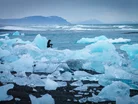
Glaciers are melting faster than ever, threatening the water security of two billion people and undermining global climate resilience.
A new United Nations (UN) report shifts focus to the environmental risks posed by this crisis, placing less emphasis on supply chain disruptions and more on the far-reaching sustainability challenges now unfolding.
The recent United Nations World Water Development (UNWWD) Report reveals that the loss of mountain glaciers poses an urgent danger to ecosystems, climate balance and human communities across the world.
These shrinking ice masses have functioned as vast freshwater reserves, releasing water steadily through warmer months.

Water systems under threat
Mountain glaciers, long described as the Earth’s "water towers", regulate freshwater flows that support ecosystems and agriculture.
The UN warns that with these systems now collapsing, water availability for two billion people is at risk.
In particular, two-thirds of the world’s irrigated agriculture depends on water sourced from mountains, including snow and ice.
With less snow falling and glaciers retreating, the food systems that depend on this water are becoming more fragile.
In mountainous areas, home to more than a billion people, the dependency on meltwater is even more acute.
Roughly half of the people in developing regions already live with food insecurity and as glacial melt declines, these communities face worsening shortages.
The World Meteorological Organisation reports that the past three years have seen glaciers melt at record rates — areas worst affected include Svalbard, Norway, Sweden and the tropical Andes.
Eastern Africa has already lost 80% of its glaciers, while South America’s Andes have seen glacier mass reduce by between one-third and one-half since 1998.
In regions like the Colorado River Basin in the United States, higher temperatures bring more rain and less snow, reducing the natural water storage that once slowly fed rivers.
This shift affects downstream areas, including major agricultural zones, extending the crisis well beyond mountain regions.
Climate feedback loops and environmental risks
Glacial retreat contributes directly to climate change.
As white ice vanishes, it reveals darker surfaces underneath that absorb more sunlight — intensifying global warming.
This phenomenon is already visible in the Alps and Pyrenees, where glacier coverage has shrunk by around 40% since the late 1990s.
Thawing permafrost and melting ice are also destabilising mountain landscapes.
Slopes that were once solid are giving way, raising the risk of avalanches and landslides.
Sudden floods from bursting glacial lakes threaten downstream communities — adding to the environmental danger.
These shifts don’t only threaten people, they also disrupt entire energy systems.
Hydropower plants, which rely on consistent water flow from mountain sources, face reduced output.
A reduction in output could lead to an increased use of fossil fuels and higher energy prices, reinforcing the very climate patterns that are causing the glaciers to melt.
Scientists estimate that 41% of mountain glacier mass could disappear by 2100 if GHG emissions continue unchecked.
A nature study cited by the UN suggests that half of the world’s glacier mass could vanish before the end of the century, unless global emissions are reduced dramatically.
A call for sustainable adaptation
Faced with rising temperatures and decreasing water availability, experts are urging governments and global agencies to act.
"Water flows downhill, but food insecurity rises uphill,” says Alvaro Lario, President of The International Fund for Agricultural Development.
“Mountains provide 60% of our freshwater, but the communities that safeguard these vital resources are among the most food insecure."
This paradox underscores the need to invest in sustainable water systems, climate-adaptive infrastructure and long-term conservation.
The UN argues that without urgent support, not just for supply chains but for sustainable resource management, the risks to global security will continue to rise.
Unesco Director General Audrey Azoulay warns that the issue transcends regional boundaries.
"Regardless of where we live, we all depend in some way on mountains and glaciers," she says.
Glaciers may be disappearing in high altitudes, but the consequences reach across continents.
As the climate shifts, so does the balance of water, food and energy that global populations depend on.
Explore the latest edition of Sustainability Magazine and be part of the conversation at our global conference series, Sustainability LIVE.
Discover all our upcoming events and secure your tickets today.
Sustainability Magazine is a BizClik brand