WEF: How Financial Institutions can Support Nature
There is an urgent need for global input and collaboration when it comes to addressing nature loss and pollution.
From circular plastics to biodiversity finance, global momentum is building behind scalable, cross-sector solutions.
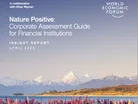
The World Economic Forum’s (WEF) report, ‘Nature Positive: Corporate Assessment Guide for Financial Institutions’ aims to help align innovation, investment and impact around a shared sustainability agenda.
The nature positive report
The WEF’s nature positive agenda is rooted in pragmatic economic foresight.
More than half the world’s GDP is moderately or highly dependent on nature and yet financing to preserve it remains starkly imbalanced.
While the private sector contributes just US$35bn annually to nature-positive investments, at least US$5tn is still directed to nature-negative activities.
The guide for financial institutions lays out a comprehensive framework for assessing companies based on their nature-related risks, impacts, dependencies and transition plans.
These assessments are critical to unlock the estimated US$10tn in annual business opportunities and 395 million jobs that could be generated by 2030 through environmentally aligned value chains.
“We are committed to rigorously monitoring and measuring this impact, emphasising our role in advancing the business growth of Top Innovators as well as the broader social and environmental outcomes driven by their solutions,” explains John Dutton, Head of UpLink and Member of the Executive Committee at the WEF.
Global contributions
In a world increasingly defined by ecological fragility, the WEF reached a pivotal 25 nation milestone in its global effort to combat plastic pollution.
This achievement is essential in reimagining the systems that underpin one of the most pressing sustainability challenges: single-use plastics.
“Reaching this 25 nation milestone is not just a celebration of numbers, it’s a testament to the growing global determination to tackle one of the world’s most pressing challenges,” says Clemence Schmid, Director of the Global Plastic Action Partnership (GPAP) at the WEF.
“These partnerships are not just symbolic, they represent concrete commitments to rethinking how plastics are produced, managed and reused.
“Together we are charting a path towards a circular plastics economy that benefits people and the planet.”
This milestone also reflects broader ambitions to integrate circular economy principles into industrial operations.
As part of this transition, initiatives like GPAP aim to align public-private collaborations with science-based targets to halt and reverse nature loss.
Collaborating for climate change
As global crises become more complex and interlinked, building resilience through cooperation becomes essential.
“Rising geopolitical tensions and a fracturing of trust are driving the global risk landscape,” said Mirek Dušek, Managing Director at the WEF.
“In this complex and dynamic context, leaders have a choice: to find ways to foster collaboration and resilience, or face compounding vulnerabilities.”
Within this environment, sustainability initiatives must do more than protect ecosystems.
They must also foster international solidarity, enable inclusive innovation and re-establish trust in collective progress.
Financial institutions hold a key to mainstreaming sustainability.
As the WEF guide details, banks, insurers and investors can drive the transformation by integrating nature metrics, ambitions and governance into their decision-making processes.
This not only mitigates risk but positions capital to flow towards resilient, regenerative business models.
Examples include ING’s assessment of its lending portfolio to incorporate nature criteria and Legal & General’s biodiversity-driven stewardship policies.
These leading organisations demonstrate how aligning financial strategy with ecological accountability is possible.
By embedding sustainability into the heart of investment and innovation, institutions can help rewrite the trajectory of the global economy.
Explore the latest edition of Sustainability Magazine and be part of the conversation at our global conference series, Sustainability LIVE.
Discover all our upcoming events and secure your tickets today.
Sustainability Magazine is a BizClik brand