
What are China’s Plans to Eliminate Air Pollution in 2025?
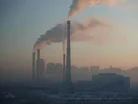
Each year, air pollution causes about two million deaths in China according to the World Health Organisation.
Fine particles in polluted air can make their way into lungs, causing diseases from lung cancer to stroke.
Li Tianwei, China’s Director of the Department of Atmospheric Environment, said the country will improve its forecasting and early warning systems alongside improving coordinated management of airborne particles and ozone, aiming to effectively eliminate severe air pollution by the end of 2025.
The World Health Organisation considers PM2.5 concentrations above 50 micrograms per cubic metre to be severe air pollution.
In 2024, China’s air quality improved significantly – down to an average PM2.5 concentration of 29.3 micrograms per cubic metre, Li Tianwei said.
Air pollution in China
Across China’s 337 cities, more than 40% of major air pollutant concentrations exceeded the country’s safety standards.
Air pollution is not a new problem, but it has been made worse by industrialism.
Many Chinese facilities do not use any flue gas treatment, so power plant emissions are considerably higher than most countries.
China’s fuel mix in 2022 was 61% coal and 17.9% oil according to the International Energy Association.
These fuel sources burning can release fly ash, bottom ash, sulphur dioxide, nitrogen oxides, mercury and other heavy metals.
There are 360 million vehicles on the road in China and a population of around 1.4 billion.
Whilst this is a lower amount of cars per person than many other countries like the US, it is the highest number of cars in a country in the world.
Carbon monoxide, nitrogen oxides and particulate matter all come from the exhaust of cars, and wear and tear from tyres, roads and brakes have an impact on air quality.
China has already made some progress – the amount of harmful particulates in the air fell by 40% from 2013 to 2020.
Pollution forecasting and early warning systems
Forecasting pollution levels can support public awareness and public health protection through issuing warnings for populations sensitive to severe pollution.
It can also enable governments to implement preventative measures, develop and evaluate improvement strategies and inform decisions on urban development, transportation infrastructure and construction.
Reducing the health impacts of air pollution can provide significant economic benefits through reducing healthcare costs and productivity losses.
Forecasting can also help to improve the accuracy of air quality interventions.
Management of airborne particles and ozone
There are many ways China could approach managing air pollution, and there is a very big mountain to climb ahead of eliminating severe pollution – particularly if the country is to achieve this before the end of 2025.
Industrial emissions control, using technologies such as electrostatic precipitators, desulphurisation and selective catalytic reduction, can help to reduce the emissions of sulphur dioxide, nitrogen oxides and fine particles from industrial processes.
Moving towards cleaner energy sources can reduce the impacts of burning coal and oil, but a stable supply of renewable or nuclear energy takes time to develop.
China already has vehicle emission standards, but making these stricter could help to reduce pollution from its 360 million vehicles.
Explore the latest edition of Sustainability Magazine and be part of the conversation at our global conference series, Sustainability LIVE.
Discover all our upcoming events and secure your tickets today.
Sustainability Magazine is a BizClik brand