What Makes Toyota’s New Vehicle Range Sustainable?
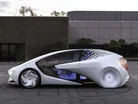
The Japanese carmaker that brought the Prius to the world now sets its sights on becoming the most comprehensive provider of alternative powertrains in the automotive sector.
Toyota is blending decades of hybrid experience with an expanded commitment to sustainability, now offering 32 electrified models across its Toyota and Lexus lines in the United States — a number it claims to be higher than any other manufacturer.
Hybrid history and the shift to sustainable options
Since the 1997 launch of the Prius, Toyota has established a strong identity around hybrid efficiency.
This longstanding commitment has become more relevant as global awareness of vehicle emissions continues to grow.
The company’s hybrid strategy gives it a foundation to build on as the wider industry turns towards decarbonisation.
In the first quarter of 2025, Toyota sold 112,608 EVs in the US.
These units represented nearly 50% of all Toyota vehicles sold in the market, highlighting both consumer appetite and the company’s ability to deliver.
As drivers face rising fuel prices and increasing environmental concern, Toyota’s diversified sustainable offering appears to resonate with buyers seeking cost-effective, lower-emission alternatives.
A key part of this strategy involves promoting plug-in hybrid electric vehicles (PHEVs) as a viable middle ground between traditional hybrids and battery-only models.
Toyota aims for PHEVs to make up around 20% of US sales by 2030, up from 2.4% today.
This approach appeals to customers who worry about EV range but still want to reduce their carbon footprint.
The latest version of the RAV4 PHEV extends its electric-only range to 50 miles.
Battery production, electric range and product roadmap
Toyota is not stopping with hybrids and PHEVs.
The company is preparing to broaden its battery electric vehicle (BEV) offering with several new models for the US and global markets.
The updated bZ SUV — an evolution of the bZ4X — is scheduled to reach dealerships later in 2025.
It will feature increased range and compatibility with Tesla’s Supercharger network, thanks to an NACS charging port.
Further additions are due in 2026, including the compact C-HR and the bZ Woodland SUV.
By mid-2027, Toyota plans to have seven fully electric models available across its Toyota and Lexus brands, including a three-row SUV and an electric Lexus ES saloon.
“We’ll sell a little bit more every year and grow with the market,” says Cooper Ericksen, Senior Vice President at Toyota Motor North America.
“But we have to think about how many Canada will use, how many the US will use, and we can then export to other global destinations.”
This growth will be supported by a substantial new manufacturing facility in North Carolina.
The site, spanning seven million square feet, will be Toyota’s first battery production plant outside Japan.
When operational, it will deliver over 30 GWh of battery capacity annually — enough for 800,000 hybrid units, 150,000 PHEVs and 300,000 BEVs.
The facility includes 14 production lines, 10 for EV batteries and four for hybrid production, which is expected to begin next month.
A strategic bet on technology mix
Toyota’s strategy stands apart in an industry where many competitors are betting heavily on pure electric vehicles.
Instead, the brand is spreading its development across four powertrain types: internal combustion engine (ICE), hybrid, PHEV and BEV.
David Christ, Vice President of Toyota Motor North America, told CNBC the brand’s approach is like a baseball game where it has its “bases loaded”.
“We’ve got ICE, we’ve got hybrid, we’ve got plug-in hybrid, we’ve got EV. So, our chances of being successful in scoring runs is just a lot better than if you’re really overly committed to any one of those power trains,” he explains.
However, this broad approach carries risks. Ericksen acknowledges that BEVs are currently “cannibalising” Toyota’s overall volume.
Maintaining a wide portfolio offers flexibility but may also limit Toyota’s ability to concentrate resources and scale pure-electric technology as fast as rivals.
Still, Toyota sees this path as more sustainable in the long term — offering consumer choice, reducing risk, and adapting to different market demands.
With in-house battery capacity growing and a product roadmap that spans hybrids to full EVs, the carmaker is positioning itself for a sustainable future grounded in diversity.
Explore the latest edition of Sustainability Magazine and be part of the conversation at our global conference series, Sustainability LIVE.
Discover all our upcoming events and secure your tickets today.
Sustainability Magazine is a BizClik brand