
Who Will Win as Harvard Defies Trump on DEI Demands?
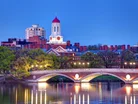
Harvard University has become the first institution to openly defy the Trump administration’s sweeping demands for control over university governance, hiring and diversity policies—setting up a rare and consequential confrontation between the federal government and one of the world’s most prominent academic institutions.
The decision, announced on Monday afternoon, came in response to a five-page letter from the administration that Harvard officials described as both unconstitutional and unlawful.
By the evening, federal authorities declared they would freeze US$2.2bn in multiyear research grants and a separate US$60bn contract with the university.
Alan Garber, President of Harvard University, said in a letter to students and staff that the administration’s demands would amount to an unacceptable level of federal interference.
“The university will not surrender its independence or relinquish its constitutional rights,” he wrote.
“Neither Harvard nor any other private university can allow itself to be taken over by the federal government.”
The move puts Harvard at the centre of a growing national battle over academic autonomy and the role of diversity, equity and inclusion (DEI) programmes—an issue that has become a political flashpoint under President Trump’s second administration.
Whilst several companies have openly defied Trump’s purge of DEI, Harvard is the first academic institution to speak out against government interference.
Trump’s demands as a threat to autonomy
Among the administration’s directives were a requirement that Harvard immediately dismantle all DEI initiatives, report foreign students who breach university conduct codes directly to federal authorities, and submit to external oversight to enforce “viewpoint diversity” across its departments.
The government further ordered the university to conduct plagiarism reviews of all current and future faculty, share extensive hiring data for federal audit and turn over admissions data disaggregated by race and test scores.
Legal scholars have described the demands as unprecedented in scope and chilling in intent.
Nikolas Bowie, a Professor at Harvard Law School and Secretary-Treasurer of the university’s chapter of the American Association of University Professors, said the administration’s ultimatum could not be ignored.
“I’m grateful for President Garber’s courage and leadership,” Nikolas says.
“His response recognises that there’s no negotiating with extortion.”
Resistance across the sector
The Trump administration has framed its efforts as a campaign to root out antisemitism and ideological bias, yet its approach has alarmed academic institutions across the country.
The targeting of Harvard follows the defunding of Columbia University last month, which saw US$400m in federal support withdrawn after the university agreed to sweeping federal conditions—including external oversight of its Middle Eastern studies programme and a newly created campus security force.
Unlike Columbia, Harvard’s rejection signals a new phase of institutional resistance.
Ted Mitchell, President of the American Council on Education, suggested the response would resonate beyond Harvard.
“This gives people a sense of the possible,” Ted says.
“If Harvard hadn’t stood up, it would have said to everyone else, ‘You don’t stand a chance.’”
He calls the university’s stance “a road map for how institutions could oppose the administration on this incursion into institutional decision-making”.
What might the legal and financial repercussions be for Harvard?
The financial implications are significant.
The administration has threatened to halt not only Harvard’s research funding, but to increase scrutiny on thousands of ongoing academic contracts nationwide.
The threatened freeze includes projects ranging from public health to energy innovation—areas with direct relevance to national sustainability goals and economic competitiveness.
In a parallel development, a coalition of universities—including MIT, Princeton and Cornell—has launched a legal challenge against a separate US$400m funding cut from the Department of Energy.
Cornell’s President Michael Kotlikoff said the research in question was “vital to national security, American manufacturing, economic competitiveness and progress toward energy independence”.
These cuts, and the conditions tied to restoring them, could impact climate research and other sustainability-linked academic work across the sector.
Students and faculty unite in the search for accountability
Harvard’s firm stance comes after months of internal turmoil and mounting pressure from students and faculty who accused the administration of bending to political pressure.
Last month, more than 800 faculty members signed a letter urging university leadership to resist what they called “anti-democratic attacks.”
Ethan Kelly, a Senior Undergraduate, says that the President’s message was a moment of clarity.
“There’s been so much concern that Harvard would fold under political pressure,” he says.
“Seeing Dr. Garber draw a clear line... that matters.”
What happens next will be watched closely—not just by other universities, but by stakeholders in science, education and sustainable development, all of whom depend on a functioning, independent research ecosystem.
Whether other institutions follow Harvard’s lead may determine whether the federal government’s attempt to reshape academia ultimately succeeds.
Explore the latest edition of Sustainability Magazine and be part of the conversation at our global conference series, Sustainability LIVE.
Discover all our upcoming events and secure your tickets today.
Sustainability Magazine is a BizClik brand