Equinor Halves Green Spend: What Does it Mean for Net Zero?
Equinor is cutting its investments in renewable resources significantly, slashing its investments to US$5bn over the next two years, half of the company's previous commitment of US$10bn.
In its Q4 and 2024 full-year results, Equinor said it is “reducing investments to renewables and low-carbon solutions to around US$5bn in total after project financing for 2025-2027” and “lowering expected capacity in renewables” to between 10GW and 12GW by 2030.
Its previous target was between 12GW and 16GW.
“Equinor is well positioned for further growth and competitive shareholder returns,” Equinor President and CEO Anders Opedal says.
Returning to copmany roots?
Equinor, which dropped 'oil' from its name in a 2018 rebranding that was meant to signify a broader energy focus beyond oil and gas, seems to be returning to its original roots. The latest strategic adjustments suggest a renewed emphasis on increasing fossil fuel production while halving the company's investment in renewables.
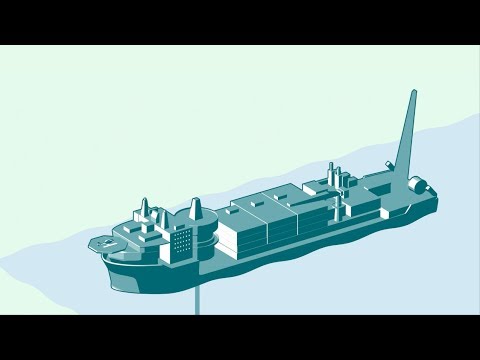
“Our oil and gas production outlook is increased to more than 10% growth from 2024 to 2027," Anders says.
"By adapting to market situations and opportunities, we are set to create shareholder value for decades to come.
“In 2024 we delivered solid financial results and high production through strong operational performance.
“We now expect the 2025 Johan Sverdrup [oil field] production to be close to the level of the last two years. This shows how we work systematically to improve our producing assets to remain a safe and reliable provider of energy.”
What impact will this have on sustainability goals?
Whilst cutting its investment in renewable energy and increasing oil and gas production, Anders still believes that Equinor is on track for its net zero targets.
“We have a consistent growth strategy and our strategic direction remains the same,” he says.
“We continue to reduce emissions from our production and build profitable business in renewables and low-carbon solutions towards our net zero ambition in 2050.”
"Equinor ditched oil from its name in 2018. Today they're doubling down on fossil fuels and slashing renewable investments by half," shares Nada Ahmed, Co-Founder of the Energy Tech Nexus.
"The strategic objectives of the company have not changed, they have always been the same. ‘To create shareholder value for decades to come.’ The problem is when value is defined only in monetary terms.
"Equinor still aims to reach net zero by 2050. They plan to get there with partnerships like the 10% stake it bought a few months ago in worlds largest offshore wind developer, Ørsted."
"This is a decision that will have repercussions for any contractors that have heavily pivoted to offshore renewables," comments Lars Berge Andersen, Partner - Energy, Shipping & Offshore at SANDS Advokatfirma DA.
"But, from an Equinor point of view, it's an understandable decision and is consistent with other majors.
"With Norway now supplying one third of Europe's gas supply, and with geopolitical tensions on the rise, a retreat to core business and a focus on profit margins is understandable."
Equinor’s Rosebank oilfield
These strategic shifts come recently after a Scottish court recently found that the consent granted to develop the Rosebank oilfield—which is 80% owned by Equinor—was issued unlawfully. Legal challenges brought by environmental groups including Greenpeace and Uplift thrust the oil fields and their owners into a court battle about their legitimacy.

New permissions are being arranged to ensure compliance, and preparation for production continues, albeit with a mandate that prohibits any actual extraction of oil and gas until these new consents are in place.
Despite legal setbacks, the projected utilisation of Rosebank underscores its importance to the UK's energy security, with a potential to facilitate over 2,000 jobs and contribute to 7% of the UK's oil output from the commencement of production until 2030.
With it estimated to be the site of around 300 million barrels of oil, Equinor says there are “sound and rational reasons for developing Rosebank”.
Equinor remains steadfast in its commitment to the fossil fuel sector as essential to the global economy: “Oil and gas will be needed to power the global economy for many years to come, including in independent scenarios of what would be needed in a Paris-aligned trajectory.
“As well as being primary sources of energy, oil and gas will be needed as input to low carbon fuels such as blue hydrogen for hard-to-abate sectors and as feedstocks for non-energy applications such as chemicals.
“To meet the needs of society, Equinor will continue to produce oil and gas for the foreseeable future.”
Drill, baby, drill?
Contrary to Equinor’s path, the global attitude towards fossil fuels is swiftly changing, influenced prominently by ecological concerns and the urgency to combat climate change. The return to office of US President Donald Trump - who is known for proclaiming "drill, baby, drill" - has signalled a renewed favour for oil and gas industries, manifesting in reversed bans on offshore drilling, approval for Arctic oil exploration and lifted restrictions on LNG exports.
This political and corporate backdrop has seen other energy giants like bp and Shell also scaling back their renewable endeavours.
“The oil and gas landscape was less favourable in 2024,” TotalEnergies CEO Patrick Pouyanné said.
“In the end, it will still be the third highest results in company history.”
The International Energy Agency’s The Oil and Gas Industry in Net Zero Transitions World Energy Outlook Special Report predicts that demand for oil and gas will peak before 2030.
However, it also says that oil and gas will remain necessary in 2050 — although on a reduced production scale.
“After the peak, demand is not currently set to decline quickly enough to align with the Paris Agreement and the 1.5°C goal,” it says.
“But if governments deliver in full on their national energy and climate pledges, then oil and gas demand would be 45% below today’s level by 2050 and the temperature rise could be limited to 1.7°C.”
Even as these companies trim their green investments, Equinor maintains a vigilant stance on balancing its portfolio by continuing to tap into the oil and gas reserves while also gesturing towards an eventual greener switch aligned with a net zero future.
Explore the latest edition of Sustainability Magazine and be part of the conversation at our global conference series, Sustainability LIVE.
Discover all our upcoming events and secure your tickets today.
Sustainability Magazine is a BizClik brand