Could Tesla's Electric Robotaxis be in Trouble?
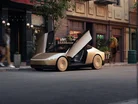
The US National Highway Traffic Safety Administration has initiated a dialogue with Tesla after videos surfaced on social media showing the company's newly-introduced 'robotaxis' violating various traffic rules.
Tesla’s ambitious foray into the autonomous transport market took its first public step in Austin, Texas.
By replacing internal combustion engine vehicles, electric robotaxis could help to reduce urban air pollution and transport emissions.
However, videos circulating online suggest that the vehicles — which operated with safety drivers in passenger seats — were exhibiting erratic driving behaviours during their inaugural runs.
“The NHTSA is aware of the referenced incidents and is in contact with the manufacturer to gather additional information,” the safety regulator said in a statement.
A rocky start
The launch was intended as a cautious initiation into Tesla’s robotaxi services.
A select few vehicles participated in this trial, with only a limited audience of analysts, influencers and shareholders in attendance.
Elon Musk celebrated the milestone on X, describing it as the “culmination of a decade of hard work”, congratulating Tesla’s AI and chip design teams.
Despite the optimism, footage has emerged suggesting that the vehicles struggled with simple, real-world driving scenarios that human drivers can navigate routinely.
For instance, one video depicts a robotaxi stopping suddenly near a parked police car.
A number of additional incidents were reported in TechCrunch, including instances of the driverless cars speeding and swerving into the wrong lanes.

A cautious approach
Though these initial challenges could serve as a hindrance for Tesla, the automation technology remains in its experimental phase.
Tesla has set strict parameters limiting its robotaxi operations to ensure safety and control, with only a dozen vehicles operating under various constraints.
Operational restrictions include non-operation during adverse weather, avoiding complex intersections and restricting passengers under the age of 18.
This limited-scale launch shows that Tesla has a long way to go if it intends to catch up with the likes of Google and Amazon, which already offer driverless vehicle services in several cities in the US, through their Waymo and Zoox brands respectively.
Already, these companies have accumulated millions of miles of real-world autonomous driving experience, providing them with substantial data advantages over the Tesla programme, which, in relative terms, is still in its infancy.
Globally, cities in countries like China, the UAE and Singapore have also embraced autonomous vehicles, amplifying efforts towards sustainable urban transport ecosystems.
Tesla’s unique approach to autonomous vehicles
Despite the growing competitive landscape in autonomous vehicle technology, Tesla’s approach remains distinct.
Tesla's reliance on in-vehicle cameras, rather than a blend of radar and LiDAR technology common among leading companies, suggests a potential cost-saving model, aligning with long-term sustainability objectives.
This camera-centric strategy, although innovative, has prompted scrutiny from regulators and consumers, emphasising the importance of balancing technological advancement with safety and sustainability.
The NHTSA has emphasized that it "does not pre-approve new technologies or vehicle systems," requiring manufacturers to confirm adherence to safety standards while investigating potential safety concerns.
This regulatory process demands thorough and extended due diligence to ensure sustainable evolutionary steps in autonomous transport.
Explore the latest edition of Sustainability Magazine and be part of the conversation at our global conference series, Sustainability LIVE.
Discover all our upcoming events and secure your tickets today.
Sustainability Magazine is a BizClik brand