How ABB & Codelco Make Copper Mining More Efficient
Chile is one of the world’s largest providers of copper and the International Wrought Copper Council expects this demand to continue to grow.
Copper is widely used and is a key metal used within lithium ion batteries, powering electrification across mobility, manufacturing and other industries.
Although producing several key elements to support a net zero future, the industry itself still has work to do to decarbonise.
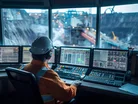
ABB and Codelco have collaborated, announcing a long-term service agreement to centralise operations at two of Chile’s major copper mines.
What does the collaboration entail?
Using ABB’s cloud based GMD Connected platform, the project is expected to produce a combined copper output of 400,000 tonnes each year.
In alignment with the agreement, ABB will provide ongoing maintenance, diagnostics and skills training for Codelco’s gearless mill drive (GMD) systems, with aims to ensure that everything runs smoothly and efficiently.
ABB aims to improve the site's sustainability and innovation goals through the centralised service management system.
Although the two mines are 1,500km apart, the joint system will allow ABB to optimise operational efficiency and asset availability with an aim to evolve technology over time.
ABB says that the agreement aligns with Codelco’s goal to maximise its uptime and enhance asset availability.
“There’s commitment from both ABB and Codelco to integrate innovative solutions within Chilean mining operations, which is vital to reach production targets in the most efficient and sustainable manner,” says Francisco Herrera, Service Manager for Chile at ABB's Process Industries division.
What are mill drive systems?
ABB’s GMDs are manufactured with the aim to eliminate all mechanical drivetrain components.
The company calls the technology a ‘workhouse’ for grinding operations, described as the most powerful mill drive system on the market, powering semiautogenous (SAG), ball and autogenous (AG) mills.

It is currently used in some of the world’s largest grinding mills, crushing ore and separating the mineral from the remaining rock.
The GMD system in the Chile mines is designed to ensure efficient ore grinding, whilst minimising energy consumption and emissions.
ABB says that the technology will help the industry move towards a low carbon future.
Francisco says: “Our collaboration with Codelco has lasted more than a decade. With demand for copper production set to increase, this latest contract award enables us to build on that partnership through expertise and technologies for looking after proprietary gearless mill drive systems.”
Codelco's sustainability approach
Codelco has laid out its main sustainability objectives that it aims to reach by 2030.
The company is looking to implement a 100% clean energy matrix alongside replacing all underground mine production and logistics with electrical equipment, all in a bid to reduce greenhouse gas emissions by 70%.
It wants to utilise water from its reservoirs into a desalination plant with a target of reducing the consumption of water by 60%.
It also wants to improve its use of local workforce and increase the supply of goods and service from local suppliers by 60%.
“We have set ourselves ambitious targets for 2030 for Scope 1 and 2 and mining trucks account for 70-80% of our Scope 1 emissions," says Pablo Contreras Silva, Head of Climate Action at Codelco.
“Like everybody else we are looking at the electrification of those trucks – but that is not something we are doing by ourselves.
“Scope 3 is something not just us but the whole industry faces as it relates to the whole value chain.
“In Codelco’s case, Scope 3 accounts for 65% of our total emissions so it is something we need to address and we are doing that through various initiatives.”