How ABB is Decarbonising the US's Biggest Ferry Service
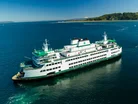
Washington State Ferries (WSF), the largest ferry operator in the United States, has taken a major step forward in its ambitious fleet electrification programme.
WSF has awarded ABB a contract to provide and integrate hybrid-electric propulsion systems for two new 160-auto ferries – its first under the System Electrification Programme. The order, which also includes an option for a third vessel, marks a milestone in WSF’s plan to build up to 16 ships by 2040 as part of efforts to reduce fleet emissions. The first two ferries are scheduled for delivery from Eastern Shipbuilding Group in 2030 and 2031.
The contract extends ABB’s early-stage involvement as propulsion vendor in the WSF project announced in 2024, updated to align with the confirmed initial shipbuilding agreement.
ABB systems feature record US ship batteries
ABB will supply and integrate end-to-end systems – including power distribution, marine automation, and advanced energy management – for ferries equipped with the largest ship batteries ever installed in the US.
Based on ABB’s Onboard DC Grid and PEMS energy management technologies, the hybrid-electric propulsion systems are engineered to deliver significantly lower fuel use and operating costs than current WSF vessels on comparable routes. Each ferry will house a 13.2-megawatt-hour energy storage system enabling all-electric, emissions-free operation on short routes and in port.
Onboard ABB systems will also minimise noise and vibration, improving comfort for passengers and crew while reducing environmental impacts on nearby wildlife and coastal communities.
WSF sets 2040 transition goals
David Sowers, System Electrification Programme Administrator for WSF, said: “The Washington State Ferries System Electrification Programme is the largest of its kind in the United States, and ABB’s continued involvement, secured through this new order, helps mitigate risk and ensure on-time vessel delivery.
“ABB’s state-of-the-art hybrid-electric propulsion systems demonstrate the company’s proven expertise in complex system integration. These systems will substantially reduce emissions and enhance operational reliability across the WSF fleet, advancing our long-term modernisation objectives and helping people and businesses thrive throughout the Puget Sound.”
Ferry system faces operational challenges
Bruce Strupp, Vice President Americas at ABB Marine & Ports, added: “This contract marks another important step in our collaboration with Washington State Ferries. It reflects the trust placed in ABB’s hybrid-electric propulsion technology and our ability to deliver reliable, scalable solutions that support WSF’s long-term sustainability goals. We’re proud to continue helping WSF modernise its fleet to maintain reliable service and reduce environmental impact.”

The electrification effort has not been without hurdles, facing multi-year delays and escalating costs. The difficulties sourcing new ferries have spurred debate among gubernatorial candidates, with some suggesting diesel should remain in use temporarily.
Fleet shortages disrupt service
Persistent vessel shortages continue to disrupt service for passengers. WSF maintains it requires 26 ferries to run reliably on all routes, factoring in maintenance and reserve capacity. Currently, the fleet includes 21 car ferries, 15 of which are operating on a reduced schedule. Five older vessels remain out of service for maintenance or repair.
The Wenatchee returned to service in mid-2025 after conversion to hybrid-electric propulsion, becoming North America’s largest hybrid-electric passenger vessel. WSF aims to rebuild and modernise its fleet – the nation’s largest – by fully transitioning to hybrid-electric power by 2040.
As Washington’s leading state agency emitter, WSF burns 19 million gallons of diesel annually to carry about 20 million passengers.
Programme costs and timeline
The electrification initiative is projected to cost US$6bn, with US$1.68bn currently funded – US$1.03bn from Move Ahead Washington and US$599m via the Climate Commitment Act. WSF aims to operate a reliable zero-emission fleet by 2050 through converting six vessels to hybrid-electric, building 16 new ones, and adding shore charging at 16 terminals.
All sustainability, net zero and sustainable supply chain leaders should attend:
- Sustainability LIVE: The Net Zero Summit - QEII Centre, London, March 4-5
- Sustainability LIVE: The US Summit - Navy Pier, Chicago, April 21-22
Co-located with Procurement & Supply Chain LIVE, these events brings together CSOs, ESG leaders and senior decision-makers at a moment when sustainability, supply chains and commercial performance are increasingly interconnected.
Tickets can be booked online today for The Net Zero Summit and The US Summit. Group discounts available.
On 1 July 2025, Governor Bob Ferguson announced that Eastern Shipbuilding Group had secured a contract to build three new 160-auto hybrid-electric ferries. In November 2025, WSF selected Stemman-Technik of Schüttorf, Germany, to provide charging systems for the fleet.
Working with ABB, WSF will spend a year designing propulsion and acquiring technology for the new vessels before construction begins. Eastern Shipbuilding is incentivised to deliver ahead of schedule, with the first new ferry expected to enter service as early as 2030.
Jumbo Mark II conversions and terminal upgrades
Conversion of the Tacoma and Puyallup Jumbo Mark II ferries – WSF’s largest and responsible for 26% of fleet emissions – has been postponed until after the 2026 football World Cup. These vessels serve dense urban routes in Central Sound. Vigor Marine was awarded the contract for Mark II upgrades in August 2023.
In parallel, WSF is collaborating with utilities to upgrade 16 terminals to support hybrid-electric operations. Memorandums of understanding with Seattle City Light and Puget Sound Energy outline plans for near-term power infrastructure. Enhancements will include new power lines, switchgear, and vessel charging systems, with Seattle Terminal’s design-build contract expected in 2026. Construction is anticipated to begin that year and conclude by 2029.