Amazon’s Lab: How Are Robots Powering Sustainable Packaging?
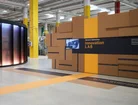
Amazon’s Operations Innovation Labs involve cutting edge technology, specialising in sustainable logistics and fulfilment.
With a mission to enhance worker safety, customer satisfaction and environmental responsibility, this high-tech hub now offers the public a glimpse into the future of global commerce.
A lab for sustainable innovation
Located in the Piedmont region, just an hour from the Italian Alps, the Vercelli innovation lab brings together engineers and scientists from across the globe.

Their goal: to design and test next-generation technologies that transform Amazon’s operations.
Founded in 2019 as part of an existing fulfilment centre (FC), the lab now serves as a base for Amazon’s mechatronics and sustainable packaging teams in Europe.
The lab is more than a think tank, it’s a functioning test bed where robots, AI tools and automation solutions are trialled and refined before being deployed globally.
These include everything from AI-driven sorters to machines that minimise packaging waste and every innovation is guided by three principles:
- Improving employee conditions
- Elevating the customer experience
- Reducing environmental impact.
Amazon’s technological tour
In 2023, Amazon expanded the Vercelli facility to include a dedicated visitor centre.
Open to the public, the centre offers free guided tours that showcase key innovations.
Visitors begin their journey in the “experience centre”, where they scan a QR code for connectivity.
A digital map outlines the click-to-delivery journey, highlighting the scale and complexity of Amazon’s logistics.
Iconic items such as the Kindle, the black tote and the Amazon delivery box are prominently displayed.
The Kindle is used not just by consumers, but by FC employees to operate robotic systems.
“It makes sorting so much easier for FC workers and basically removes the step of needing to manually sort packages that head to the same direction,” Richard Zeger, Sr Robotics R&D Manager and Head of Amazon's Vercelli Innovation Lab, told Amazon.
“I want visitors to see how every innovation is always focused with the customer in mind, always trying to deliver in time, and more efficiently.
“I also want them to understand that new technologies are constantly being developed in the heart of Europe and we are really proud of that.”
Robotics in action
One of the standout technologies on display is the Flat Sorter Robotic Induct (FSRI).
This AI-powered machine uses vision sensors to sort items by size and destination with high speed and precision.
It represents Amazon’s commitment to solving complex problems through iterative design.
As the tour progresses, visitors witness the impact of automation on workplace safety.
Infographics illustrate how machines have reduced repetitive tasks and the need to handle heavy loads, enabling employees to focus on higher-value activities.
Another key system, the Bags Containerisation Matrix Sorter (BCMS), revolutionises how packages are grouped.
Instead of individual sorting, packages headed to the same postal code are bundled into one bag, boosting capacity and reducing manual labour.

Sustainable packaging on demand
The lab’s most recent breakthrough is the Universal Robotic Labeller, which applies labels to products of varying shapes, even those without packaging.
This innovation helps reduce waste and improve recyclability.
The automated packaging technology, currently in use at Amazon’s Bristol FC in the UK, is another highlight.
This system custom-builds paper bags to fit individual items, reducing excess packaging material.
During the tour, visitors can try the technology for themselves under the guidance of expert engineers.
These made-to-fit bags are crafted from recycled paper and go straight to the conveyor belt, ensuring a seamless, eco-friendly process from the lab to your doorstep.
A global innovation ecosystem
The Vercelli facility is part of a broader Amazon network dedicated to robotics and sustainability.
In Sumner, Washington, Amazon operates another innovation hub nestled among Pacific Northwest greenery.
It features technologies like the Hercules robot, which lifts up to 1,250 pounds and real-time packaging machines that reduce cardboard use.
Meanwhile, in suburban Boston, Amazon Robotics’ headquarters serves as the nerve centre for developing and testing next-generation warehouse technologies.
Here, packaging innovation labs simulate drops, pressure and impacts to ensure items can be shipped in their original packaging, cutting down on unnecessary materials.
Other innovations include a patented vest that signals robots to pause when a human enters their path, and a living wall of plants embedded with sensors.
“Inside our Innovation Lab in Sumner, WA we’re developing ways to make each box, bag and envelope smaller, lighter, and more sustainable, without compromising product protection,” Kara Hurst, Chief Sustainability Officer at Amazon, wrote on Linkedin.
“The team’s work includes intentionally dropping, slamming, and shaking packages to test durability (which is pretty cool to see in person)!
“They’ve also developed a machine that measures the dimensions of a product and instantly builds a package around it.”
This data-rich vertical garden supports both sustainability research and software development.
Experiencing the future
The Vercelli visitor centre tour takes around one hour and is open to guests aged six and over.
It’s divided into three main sections:
- The Big Picture: Explore Amazon’s logistics and delivery network.
- The Innovation Mindset: Learn how new technologies like the FSRI are developed and evolved.
- The Shop Floor: Discover real-world robots and AI tools that are changing the game in safety, sustainability and efficiency.
The Amazon Operations Innovation Lab is more than a technological showcase, it’s a working embodiment of the company’s pursuit of sustainable, scalable and human-centric innovation.
From robotic sorters to smart packaging, every advancement is designed with both people and the planet in mind.
Through this centre, Amazon opens the doors to its most ambitious vision yet: an efficient, automated and environmentally responsible future.