Amcor: How can Brands Build Trust using Recycled Packaging?
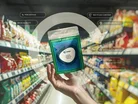
In Europe, 76% of grocery shoppers are knowingly buying products that use recycled material in their packaging, according to a report from Amcor.
The responsible packaging leader has launched its consumer insight report, titled Recycled Content, Real Impact, which explores how shoppers interact with recycled packaging.
It focuses in particular on shoppers’ perceptions of post-consumer recycled (PCR) content in packaging for supermarket products.

Key findings from Amcor’s report
Amcor’s report uses results from 3,201 consumers surveyed and 32 qualitative interviews across six European countries.
The research found that 91% of European consumers are aware that some products usually found in a supermarket have recycled plastic in their packaging.
This includes many familiar product categories such as food, beverage, pet foot, cleaning and beauty products.
Almost eight in 10 consumers believe that using recycled plastic in packaging is an effective way to reduce environmental impact.
Lucie Charbonnel, Sustainability Director at Amcor EMEA, told Sustainability Magazine: “The EU’s Packaging and Packaging Waste Regulation 2030 targets for PCR are on the horizon and brands should start taking action now to set themselves up for future success.
“Beginning to adopt PCR, even if only for specific SKUs or particular geographies, will enable technical validation and help brands to set up traceability processes for certifications.
“At the same time, the introduction of PCR is financially incentivised in several countries already. France and Spain, for example, give a reduction of Extended Producer Responsibility (EPR) fees related to the use of recycled content. This is money directly into the pockets of brand owners.”
Building trust with consumers
The report reveals that PCR isn’t a key purchase driver like taste or quality, but it can give a positive message to consumers.
The survey shows that 63% of consumers say recycled content significantly increases their trust.
Amcor says that brands can benefit from this by making recycled packaging a core component of their identity.
For some consumers that said the use of PCR does not increase their trust, reasons given included concern about the validity of sustainable claims or brands only having a financial interest in sustainability.
Sarah Neerkorn, Market Insights Manager at Amcor, says: “Consumers understand recycled material and respond very positively to it.
“It’s clear how much consumers value third-party certification.
“Even though they may not understand what’s behind the certification, it gives them reassurance and adds to the credibility of the claim.”
All sustainability, net zero and sustainable supply chain leaders should attend:
- Sustainability LIVE: The Net Zero Summit - QEII Centre, London, March 4-5
- Sustainability LIVE: The US Summit - Navy Pier, Chicago, April 21-22
Co-located with Procurement & Supply Chain LIVE, these events brings together CSOs, ESG leaders and senior decision-makers at a moment when sustainability, supply chains and commercial performance are increasingly interconnected.
Tickets can be booked online today for The Net Zero Summit and The US Summit. Group discounts available.
The importance of clear labelling
Positive attitudes towards PCR among consumers are linked to environmental impact (67%), resource conservation (53%), lower carbon footprint (43%) and support for a circular economy (40%).
According to Amcor, consumers still want verification for claims, with nearly four out of five wanting to see independent verification of recycled material in packaging.
This shows that for brands across Europe, clear labelling can be a strong method of building trust with consumers, with a focus on concrete facts backed up by evidence.
Lucie continues: “There is a clear growth opportunity, with conscious consumers already appreciating products that use recycled plastic in their packaging. Our research shows that brands can improve their trust amongst consumers by using PCR in their packaging.
“However, brands must prioritise clarity and focus on concrete facts when making sustainability claims about their packaging to reassure consumers about the validity of their claims.
“Ultimately, brands that embrace PCR material today with clarity and transparency will be best positioned to meet approaching regulation, as well as win more trust with their customers.”
Company portals
Executives

Lucie Charbonnel
Sustainability Director, Amcor Flexibles EMEA
Sarah Neerkorn
Market Insight Manager